Russia’s Kuryer Laser Robot Offers a New Approach to Mine Disposal
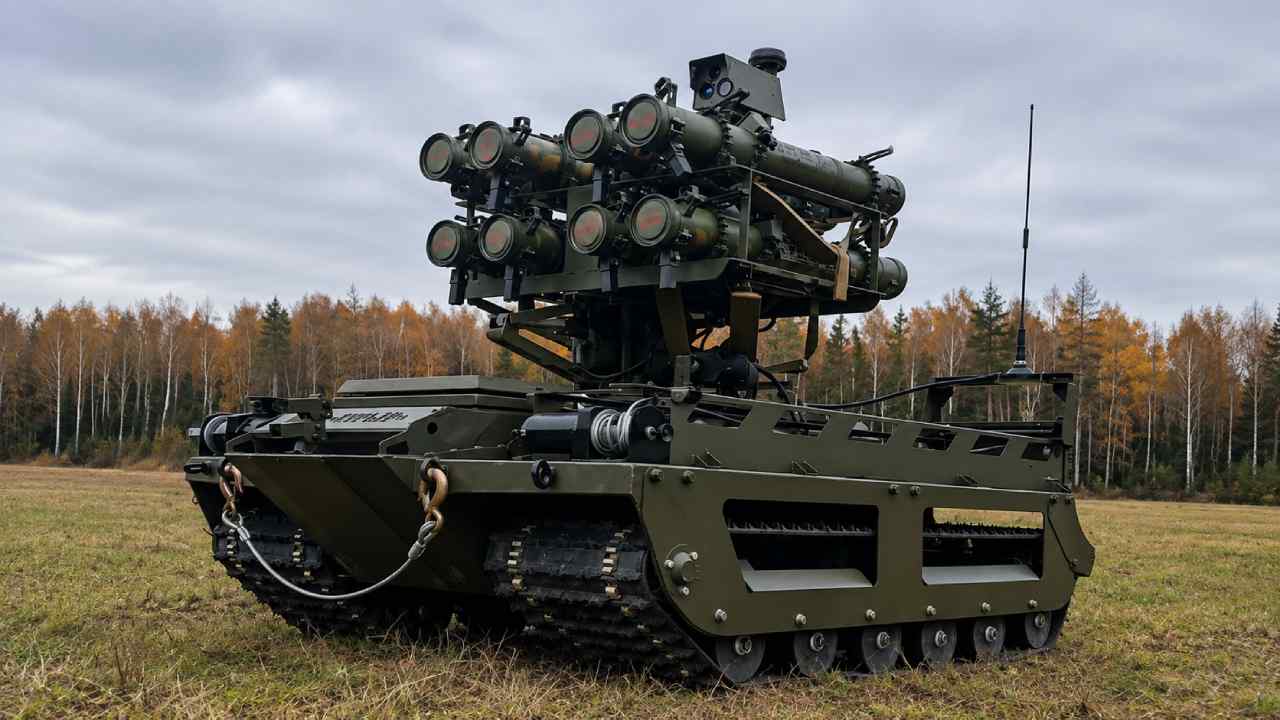
Brivify – Mine disposal has traditionally been one of the most dangerous tasks performed in hazardous areas. However, Russia’s Kuryer, meaning “Courier,” presents a different approach. The ground robot carries a high-powered laser system designed to neutralize buried ammunition without deliberately triggering a major explosion. Oleg Zaremba, an expert associated with the Popular Front’s Kulibin Club program, has described how the laser directs concentrated energy toward specific parts of a target. In principle, the heat can penetrate protective material and affect the energetic material inside. This approach allows operators to remain farther away from potentially dangerous ammunition. Therefore, the technology could reduce direct exposure for personnel working around mines, grenades, and unexploded artillery rounds. At the same time, its real-world effectiveness would depend on several factors. The type of ammunition, surrounding terrain, weather, and target condition could all influence performance. Even so, the concept highlights how robotics and directed energy are changing mine-disposal technology.
Read Also: Mazda 6e Review: Stylish Electric Sedan with Premium Looks but Compromised Usability
High-Powered Lasers Sit at the Heart of Kuryer
The laser is the central component of the Kuryer system. According to Zaremba, a sufficiently powerful beam can penetrate substantial protective material under suitable conditions. He has claimed that even ceramic layers around 10 centimeters thick can be penetrated. Once the beam reaches the internal material, sustained heating is intended to burn or otherwise disable the energetic contents of mines, grenades, or artillery ammunition. This concept differs from disposal methods that intentionally detonate an explosive object from a safe distance. Instead, the goal is to use thermal energy to make the ammunition less dangerous without producing the same type of blast. However, laboratory capability does not automatically guarantee identical performance in the field. Dust, smoke, target composition, distance, and atmospheric conditions can affect laser energy. Therefore, independent testing and detailed operational data would be important when evaluating the system’s broader effectiveness.
Distance Could Keep Personnel Farther From Danger
One of the clearest advantages of robotic mine-disposal technology is distance. Kuryer is reportedly designed to engage dangerous ammunition from several hundred meters away. Consequently, personnel may be able to control parts of the operation without standing close to the target. That distance becomes especially important when unexploded ammunition appears near buildings or populated areas. An uncontrolled detonation can send fragments outward and damage nearby structures. Therefore, a method intended to disable ammunition without a large explosion could offer another option in certain situations. Nevertheless, robots do not remove every risk. Operators still need accurate information about the object they are dealing with. Different explosives and ammunition designs can behave differently when exposed to heat or physical damage. As a result, remote technology works best as part of a wider safety process. Its greatest contribution may simply be placing a machine where a human would otherwise have to go.
Precision Matters as Much as Raw Laser Power
A powerful laser alone is not enough. The beam must remain focused on a small section of the target long enough to transfer useful energy. According to Zaremba, the system may need to hold the laser on a selected point for several seconds. That requirement creates a significant engineering challenge, particularly at longer distances. Even a small movement in the platform could shift the beam away from its intended location. Therefore, stabilization and targeting technology become essential parts of the system. Zaremba has said modern turret systems can maintain a very small light spot on a target from distances approaching one kilometer. Such claims illustrate why precision is central to directed-energy technology. Sensors must identify the target, while tracking systems continuously correct the beam’s position. Meanwhile, the turret must compensate for movement and vibration. In practice, this combination of tracking, stabilization, and control can be just as important as the laser’s maximum power.
A Robotic Platform Adds Mobility to the System
Mounting the laser on a ground robot gives the system another advantage: mobility. Instead of relying entirely on a fixed installation, operators can move the platform closer to an area containing dangerous objects. This flexibility may help when obstacles or environmental conditions limit the laser’s effective range. However, mobility introduces new technical problems. Uneven ground can cause vibration, while dust and smoke can interfere with optical sensors. Communication must also remain reliable because operators need to understand what is happening around the robot without standing beside it. Consequently, stabilization systems, cameras, sensors, and remote controls become critical. This is what makes the Kuryer concept more interesting than a laser alone. The robot acts as a mobile platform that combines several technologies into one system. By bringing sensors and directed energy into hazardous areas, the platform aims to reduce the need for people to physically approach unexploded ammunition.
Read Also: NFL Hall of Fame Game 2026 Kicks Off Preseason with Panthers vs Cardinals
The Technology Is Also Being Explored Against Drones
The technology described around Kuryer is not limited to stationary ammunition. Zaremba has also discussed the use of laser systems against unmanned aerial vehicles. However, drones present a very different technical challenge because they move through the air. A tracking system must continuously follow the aircraft while keeping the laser focused on a small area. According to Zaremba, the beam needs to remain on a selected point for at least several seconds to produce the intended effect. Therefore, tracking accuracy becomes particularly important. Distance, atmospheric conditions, target speed, and sudden changes in direction can all complicate the process. This application demonstrates the broader interest in directed-energy systems. The same basic principle of concentrating energy on a target can support different roles, but each role requires its own sensors and control systems. As a result, successful mine disposal does not automatically mean identical performance against a moving aerial target.
Populated Areas Could Benefit From More Controlled Disposal
The potential to reduce explosive effects makes systems like Kuryer particularly interesting for areas near civilian infrastructure. Traditional disposal methods sometimes require large safety zones because an intentional detonation can produce blast effects and dangerous fragments. A technique that can disable certain ammunition without a major explosion could provide specialists with another option. However, no single method is suitable for every explosive object. Ammunition varies widely in construction, condition, and sensitivity. An old unexploded shell may also behave differently from a recently manufactured mine. Therefore, specialists would still need to assess each situation before choosing a disposal method. The value of laser-based systems lies in expanding those choices rather than replacing every existing technique. When conditions are suitable, a remote robot could approach an area while personnel remain at a safer distance. That combination of separation and precision explains much of the interest surrounding robotic mine-disposal technology.
Robotics and Directed Energy Point Toward Safer Operations
Kuryer illustrates a broader shift in how technology can approach hazardous work. Instead of sending people closer to unexploded ammunition, engineers are developing machines that can enter dangerous areas on their behalf. The laser itself is only one part of that transformation. Sensors, remote communication, robotic mobility, stabilization, and precise targeting must work together for the concept to function effectively. Moreover, claims about performance still require transparent testing before the system’s full capabilities can be assessed independently. Real environments introduce variables that controlled demonstrations may not reproduce. Weather, terrain, target materials, and ammunition condition can all influence the outcome. Nevertheless, the direction of development is significant. Robotics can increase the physical distance between humans and hazardous objects, while directed energy may provide new ways to interact with those objects remotely. In mine disposal, that distance could become one of technology’s most valuable contributions.



Post Comment