Travis Kelce Questions Falcons’ Hard Tackle on His Injured Ankle
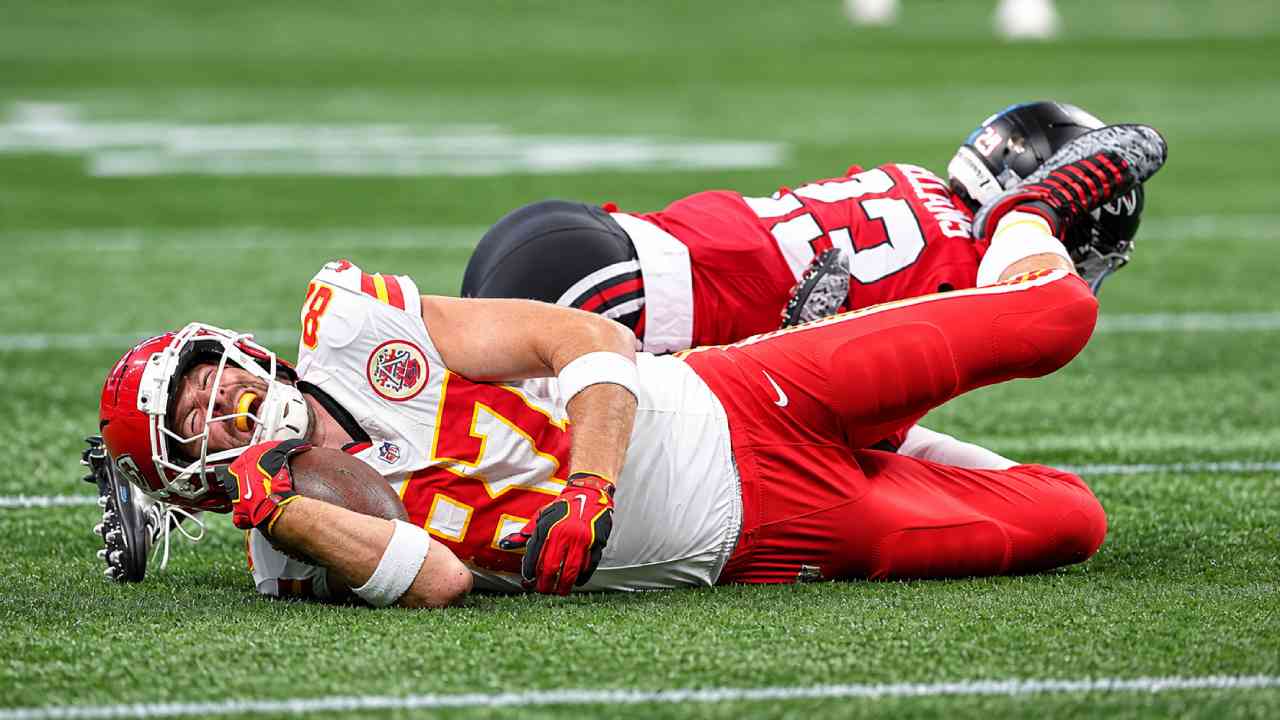
Brivify – Travis Kelce faced another difficult moment during the Kansas City Chiefs’ game against the Atlanta Falcons on November 15, 2026. The veteran tight end suffered a painful hit involving his already injured ankle. Although physical contact is common in the NFL, this particular tackle raised questions about player safety. Falcons defender DeMarcco Hellams brought Kelce down during the first quarter. However, the way the tackle affected his ankle immediately attracted attention. Kelce appeared uncomfortable and briefly left the field for medical evaluation. Fortunately, he returned to the game and continued helping his team. Days later, the incident became a topic on the New Heights podcast. Kelce discussed the tackle while acknowledging that he could not know his opponent’s intentions. His comments highlighted a familiar concern in professional football. Players must compete aggressively while protecting their bodies from further injury.
A First-Quarter Incident Creates Immediate Concern
The incident unfolded during the opening quarter as Kansas City faced Atlanta. Travis Kelce became involved in a tackle that placed pressure on his injured ankle. DeMarcco Hellams completed the defensive play, but the contact left Kelce visibly uncomfortable. Shortly afterward, the Chiefs tight end walked toward the sideline with an apparent limp. Team personnel evaluated his condition before he temporarily headed to the locker room. Naturally, the situation concerned fans who understood his importance to Kansas City’s offense. Kelce has long served as a reliable receiving option and an experienced leader. Therefore, any injury involving him can affect the team’s offensive planning. Despite the uncomfortable moment, he eventually returned during the second quarter. His return offered some reassurance, although it did not establish that his ankle had fully recovered. The episode also reminded viewers how quickly a routine football play can become a medical concern.
Travis Kelce Discusses Whether the Hit Was Intentional
Following the game, Travis Kelce addressed the incident during an episode of New Heights. The podcast conversation included his brother, former Philadelphia Eagles center Jason Kelce. A listener questioned whether the Falcons defender had deliberately targeted the injured ankle. However, Travis avoided presenting speculation as an established fact. He explained that he could not determine exactly what the defender intended. The position of his body during the tackle also contributed to the painful outcome. Nevertheless, he acknowledged how uncomfortable the contact felt. His response showed the difficulty of judging intent during a fast-moving football play. Defensive players often make decisions within seconds, and awkward contact can occur without deliberate misconduct. At the same time, injured players have understandable concerns about vulnerable body parts. Kelce’s measured comments allowed both possibilities to remain open without directly accusing Hellams of wrongdoing.
Read Also: Volkswagen ID. Polo GTI Clubsport Concept Packs 362 bhp Into a Two-Door EV
Jason Kelce Questions the NFL Injury Reporting System
The discussion soon expanded beyond one tackle. Jason Kelce raised concerns about how detailed injury reports might affect player safety. NFL teams regularly provide information about injured players before upcoming games. These reports help communicate player availability and support transparency across the league. However, Jason questioned whether identifying specific injuries could create additional risks. Opposing players may already understand which body parts are vulnerable. Therefore, detailed public information could potentially influence how defenders approach certain situations. Jason suggested considering broader descriptions, such as upper-body or lower-body injuries. Still, this idea remains a viewpoint rather than an established solution. Injury reporting also serves important competitive and administrative purposes. Any major change would require careful consideration of those responsibilities. The conversation revealed a broader tension between transparency, competitive preparation, and protecting athletes who continue playing through injuries.
Playing Through Ankle Pain Presents Difficult Challenges
An ankle injury can create significant challenges for an NFL tight end. The position demands sudden direction changes, quick acceleration, blocking, and physical contact. Consequently, even limited discomfort may affect movement and confidence. Travis Kelce has built his career around reading defensive coverage and creating opportunities for his quarterback. However, these skills still depend on reliable movement. A high-ankle sprain can be particularly troublesome because it involves structures above the ankle joint. Recovery depends on the injury’s severity and the player’s individual condition. Furthermore, repeated physical demands may complicate the healing process. Kelce acknowledged the difficulty of recovering while continuing to compete each week. His willingness to play reflects his commitment to football, but medical decisions remain important. Ultimately, returning to action does not automatically mean an athlete has regained full physical strength.
Kansas City Chiefs Depend on Kelce’s Experience
Travis Kelce remains an important figure within the Kansas City Chiefs’ offensive system. His value extends beyond individual catches and receiving statistics. He understands defensive formations and often identifies opportunities in crowded areas of the field. Moreover, his experience helps younger teammates navigate difficult situations during games. When Kelce briefly left the Falcons matchup, his absence created understandable concern. Coaches must adjust their offensive options whenever a key player becomes unavailable. However, professional teams also need alternative strategies to handle unexpected injuries. This balance becomes especially important during a demanding NFL season. Kelce’s return demonstrated his determination to remain involved, although his physical condition still required attention. For Kansas City, protecting an experienced playmaker can matter as much as maximizing his immediate contribution. The situation highlighted how individual health and team performance frequently intersect in professional sports.
NFL Player Safety Returns to the Spotlight
The tackle involving Travis Kelce also reflects a larger conversation about player safety. American football combines speed, strength, and frequent physical collisions. As a result, injuries remain an unavoidable concern despite improvements in equipment and medical procedures. The NFL maintains rules designed to limit certain dangerous forms of contact. Nevertheless, determining whether a particular tackle violates those rules requires careful evaluation. A painful result alone does not prove that a defender acted illegally. Similarly, an injured player’s concerns deserve attention without automatically establishing misconduct. In this case, Kelce did not claim to know Hellams’ intentions. That distinction matters when discussing a controversial play. Fans may interpret video footage differently, but responsible analysis should separate observable contact from speculation. The incident therefore offers an opportunity to discuss safer competition without making unsupported accusations against an individual player.
The Mental Pressure of Competing While Injured
Physical pain represents only one challenge for professional athletes. Playing through an injury can also create mental pressure. Every sudden movement may remind a player of an earlier painful experience. Meanwhile, expectations from teammates, coaches, and supporters can increase the desire to remain available. Travis Kelce’s situation illustrates this difficult balance. His competitive mindset encourages him to contribute whenever possible. However, athletes must also consider how repeated strain could affect their recovery. Confidence becomes especially important when performing movements that place pressure on a vulnerable joint. Fortunately, medical teams can help assess symptoms, functional ability, and recovery progress. Still, every injury requires an individual approach. There is no universal timetable that guarantees a safe return. For experienced players like Kelce, making thoughtful decisions can help balance immediate competitive goals with longer-term physical well-being.
What the Falcons Tackle Reveals About Football’s Physical Demands
The discussion surrounding Travis Kelce extends beyond a single uncomfortable moment. It highlights the complicated relationship between aggressive competition and player protection. NFL defenders must react quickly, while offensive players constantly expose themselves to physical contact. Therefore, difficult tackles can occur even when neither player intends to cause harm. However, existing injuries can make ordinary contact feel especially dangerous. Kelce’s comments offered a personal perspective without turning uncertainty into an accusation. Meanwhile, Jason Kelce introduced questions about whether injury reporting practices deserve further discussion. Together, these perspectives reveal challenges that professional football continues to face. Teams want their best athletes available, but recovery and medical judgment remain essential. As the season progresses, Kelce’s ankle condition will remain relevant to his playing ability. His experience serves as another reminder that football demands both competitive determination and careful attention to player health.



Post Comment