Lithuania Moves to Lift Nuclear Weapons Ban Amid Russia Tensions
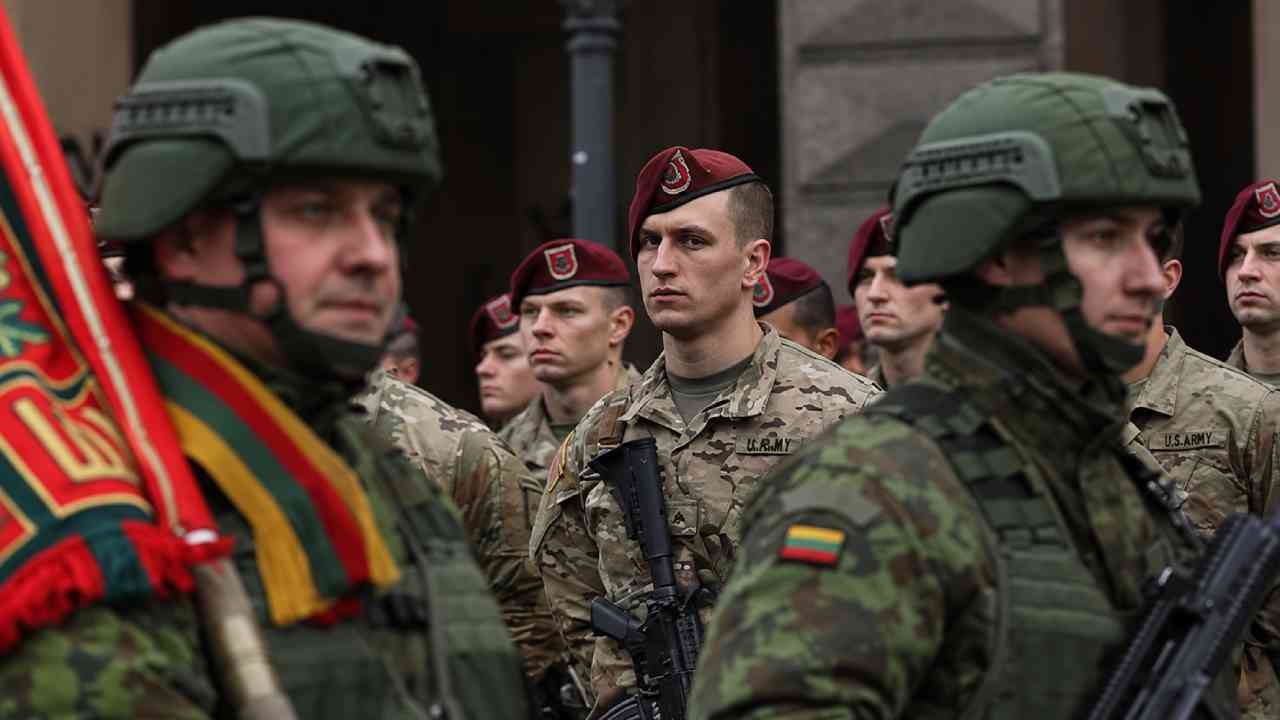
Brivify – Lithuania Moves toward a significant change in its defense framework as security concerns reshape thinking across Europe. On September 22, 2026, the Seimas backed a constitutional amendment that would remove restrictions on weapons of mass destruction and foreign military bases. The proposal received 99 votes in favor, while 13 lawmakers opposed it and five abstained. However, the vote does not mean nuclear weapons will immediately arrive in Lithuania. Instead, it advances a legal process that could remove a constitutional barrier to future decisions. The debate reflects Lithuania’s effort to reconsider older restrictions within today’s NATO security environment. Moreover, the issue carries added weight because Lithuania sits on NATO’s eastern flank. Its proximity to Russia’s Kaliningrad region and Belarus makes defense policy especially sensitive. Therefore, the amendment is better understood as a change in Lithuania’s available security options rather than a decision to deploy nuclear weapons.
Read Also: Brabus Bodo: A Million-Pound Super GT with 986bhp
Article 137 Sits at the Center of the Debate
The constitutional debate centers on Article 137. Under the existing provision, weapons of mass destruction and foreign military bases cannot be stationed on Lithuanian territory. The proposed amendment would repeal that article. Consequently, Lithuania would no longer have this specific constitutional restriction if the process succeeds. The issue has become increasingly important as officials examine how Lithuania fits into NATO’s broader deterrence structure. Yet removing the restriction and hosting nuclear weapons remain two separate decisions. The amendment would create legal flexibility, but it would not automatically authorize a particular deployment. This distinction matters because headlines can easily make the development appear more immediate than it is. For Lithuania, the current question is whether its constitution should permanently rule out options that allies may consider important in a changing security environment.
The September Vote Was Important but Not Final
The September 22 vote represents an important parliamentary step, although the constitutional process remains unfinished. Lithuania requires a higher threshold when formally adopting constitutional amendments. According to the Seimas, lawmakers must vote twice during the adoption procedure, with at least three months between the votes. At least 94 of Lithuania’s 141 lawmakers must support the proposal on each occasion. Seimas Speaker Juozas Olekas said the first adoption vote was scheduled for October 6, 2026, followed by the final vote on January 12, 2027. Therefore, the 99 votes recorded in September demonstrate substantial support, but they do not complete the constitutional change. The coming votes will determine whether that political support remains strong enough to clear the required threshold.
Russia Has Changed Lithuania’s Security Calculations
The broader security environment explains why Lithuania Moves to reconsider a constitutional rule that has existed for decades. Russia’s full-scale invasion of Ukraine in 2022 fundamentally altered European defense planning. Lithuania has since placed even greater emphasis on NATO deterrence and allied military cooperation. In July 2026, Reuters reported that Lithuanian parliamentary parties had agreed on a plan to remove the constitutional restrictions. President Gitanas Nausėda presented the change as part of adapting to a deteriorating security environment. Still, it is important to separate Lithuania’s stated security concerns from claims about Russia’s future intentions. Lithuanian officials argue that stronger deterrence can reduce vulnerability. Moscow, meanwhile, rejects Western claims that it intends to attack NATO countries. Those competing positions form part of a much larger dispute over European security after the invasion of Ukraine.
Lithuanian Officials Frame the Change as Deterrence
Supporters of the amendment have emphasized deterrence rather than an immediate plan to acquire nuclear weapons. Lithuanian Vice Minister of National Defence Karolis Aleksa said removing the constitutional restriction would send Russia a stronger deterrence signal. He linked the argument to Russia’s nuclear rhetoric since its invasion of Ukraine. Likewise, Seimas Speaker Juozas Olekas described the amendment as a way for Lithuania to participate more fully in collective defense arrangements. From this perspective, supporters see legal flexibility as valuable even if no nuclear deployment follows immediately. However, deterrence policy involves political, military, and diplomatic consequences. For that reason, the constitutional debate extends beyond a technical legal amendment. It raises a broader question about how much strategic flexibility Lithuania wants as NATO adapts its defense posture in Europe.
Geography Gives Lithuania’s Decision Greater Strategic Weight
Lithuania’s location makes almost every major defense decision strategically significant. The Baltic country borders Belarus and Russia’s heavily militarized Kaliningrad exclave. It also forms part of NATO’s northeastern frontier alongside Latvia and Estonia. Consequently, discussions about military infrastructure or nuclear deterrence attract attention far beyond Vilnius. Geography does not automatically determine policy, but it shapes the risks that Lithuanian officials consider when planning national defense. This is also why changes that might appear largely legal elsewhere can carry wider geopolitical meaning in Lithuania. At the same time, geographic vulnerability can produce different political conclusions. Supporters may view greater NATO flexibility as necessary protection. Critics can question whether expanding military options creates additional risks. The constitutional process therefore reflects a wider debate over how a relatively small frontline NATO member should respond to an increasingly difficult regional security environment.
Read Also: Cam Skattebo’s Parents Helped Shape His Remarkable Football Journey
Removing the Ban Would Not Guarantee Nuclear Deployment
One of the most important details is also one of the easiest to overlook. Repealing Article 137 would not automatically place nuclear weapons inside Lithuania. Instead, it would remove a constitutional prohibition that currently limits what future governments can consider. Any actual deployment would involve additional political and defense decisions, as well as coordination with allies. Therefore, the amendment is primarily about strategic options. This distinction makes the debate more nuanced than a simple choice between having nuclear weapons and rejecting them. Lithuania Moves to create legal room for future security arrangements while leaving specific decisions for another stage. From a policy perspective, that flexibility appears to be central to the supporters’ argument. Whether Lithuania eventually uses that flexibility is a separate question that the current parliamentary process does not answer.
The Debate Extends Beyond Lithuania’s Borders
Lithuania’s discussion is unfolding during a broader European reassessment of defense and nuclear deterrence. Russia’s war against Ukraine has pushed European governments to reconsider military readiness, spending, and the credibility of existing deterrence arrangements. Lithuania’s proposal fits within that wider strategic environment, although every NATO member operates under its own laws and political constraints. For Vilnius, changing the constitution could remove an unusual limitation on future cooperation with allies. Nevertheless, the significance of the proposal should not be overstated before the constitutional process is complete. Lithuania has not announced that nuclear weapons will be stationed on its territory. Rather, lawmakers are deciding whether the constitution should continue to prohibit such an option altogether. That difference is essential for understanding what has actually changed and what remains hypothetical.
The Next Votes Will Determine Whether the Change Becomes Law
For now, Lithuania remains in the middle of a constitutional process. The September vote showed broad parliamentary support, but the proposal still faces the formal adoption stages required for constitutional amendments. The planned votes on October 6, 2026, and January 12, 2027, will therefore be decisive. Each requires support from at least 94 lawmakers. Until those steps are completed, Article 137 remains relevant to Lithuania’s legal framework. Still, the debate itself shows how dramatically European security priorities have evolved. A restriction once embedded in Lithuania’s post-Soviet constitutional order is now being reconsidered through the lens of NATO deterrence and regional security. Ultimately, the process is not only about nuclear weapons. It is also about how Lithuania defines its strategic choices in an uncertain European security landscape.



Post Comment