Mogadishu Erupts as Somalia’s Political Tensions Escalate Into Armed Conflict
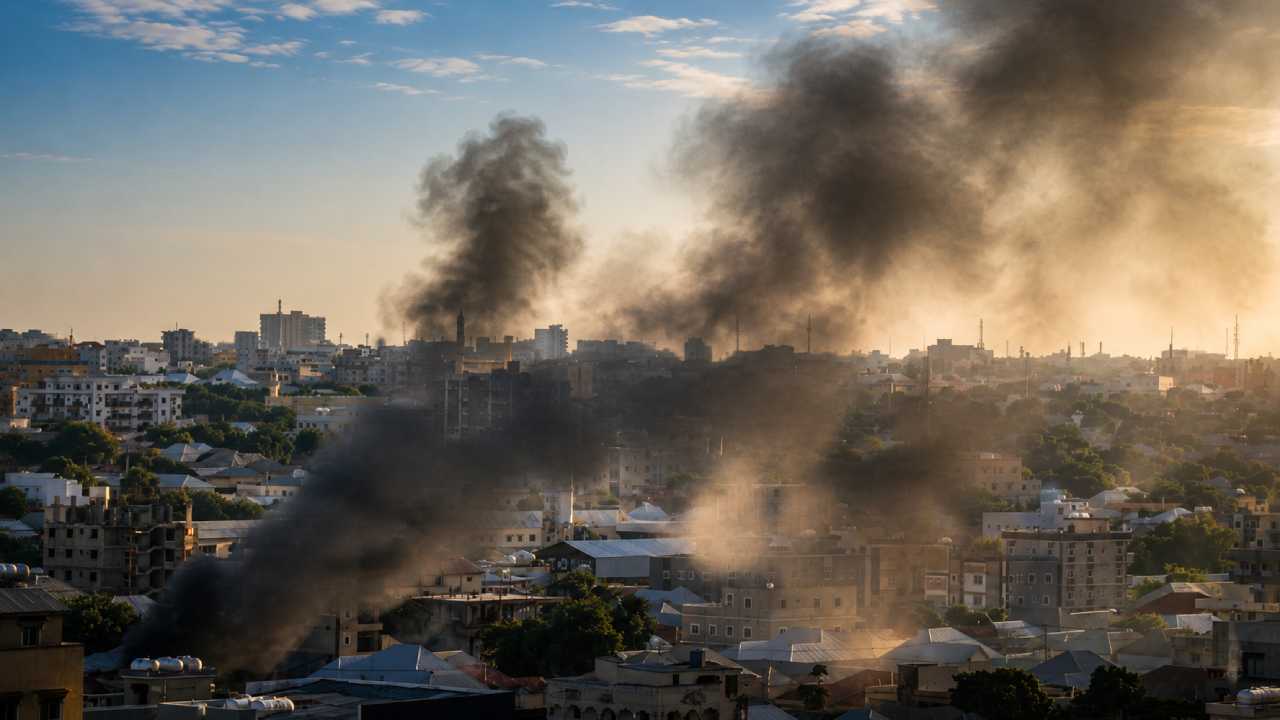
Brivify – The phrase Mogadishu Erupts as Somalia’s political tensions escalate into armed conflict has captured global attention in recent days. What began as a political disagreement over leadership and election delays rapidly transformed into a dangerous confrontation in the heart of Somalia’s capital. For many residents, the sudden eruption of violence felt like a painful reminder of the instability that has haunted the country for decades. While political disagreements are common in many nations, the situation in Somalia carries unique risks because political disputes can quickly intersect with long-standing security challenges. Consequently, what appeared to be a political standoff soon evolved into a crisis that affected thousands of ordinary citizens.
Read Also: Fiat Grande Panda Review: Affordable Style, Practicality, and Character in One Compact Package
Why the Political Crisis Reached a Breaking Point
At the center of the controversy is President Hassan Sheikh Mohamud’s decision to remain in office after the expiration of his mandate. As a result, plans for a new election were delayed, triggering criticism from opposition leaders who argued that democratic processes were being undermined. Meanwhile, government officials insisted that their actions were necessary to preserve national stability. This disagreement created an atmosphere of growing distrust between rival political factions. Over time, tensions intensified and public frustration became increasingly visible. Therefore, when opposition groups announced plans for demonstrations, many observers feared that the situation could deteriorate further. Unfortunately, those concerns soon proved justified as violence erupted across parts of Mogadishu.
Mogadishu Residents Caught in the Middle
For ordinary citizens, political conflict often brings consequences far beyond the headlines. As reports of gunfire and explosions spread across Mogadishu, many families found themselves trapped between opposing forces. Some residents reportedly fled their homes while others remained indoors, hoping to avoid the danger unfolding outside. Moreover, schools, businesses, and transportation networks experienced disruptions as security concerns grew. In situations like these, civilians frequently become the most vulnerable victims despite having no direct involvement in political disputes. Consequently, the human cost of the crisis extends well beyond the battlefield. Fear, uncertainty, and displacement often leave lasting scars on communities long after the shooting stops.
The Sounds of Conflict Echo Across the Capital
Witness accounts described a tense and frightening atmosphere throughout several neighborhoods of Mogadishu. Heavy gunfire, explosions, and military movements reportedly echoed through the city during the height of the clashes. Furthermore, reports suggested that some residential areas suffered damage as fighting intensified. Such scenes have become deeply troubling for a population that has spent years hoping for greater stability. Although Somalia has made progress in rebuilding institutions and improving security in certain regions, episodes like this highlight how fragile those gains remain. Therefore, many citizens viewed the violence not only as a political crisis but also as a threat to the country’s broader recovery efforts.
Opposition Leaders Raise Serious Concerns
As the conflict unfolded, opposition figures became increasingly vocal in their criticism of the government. Several leaders accused security forces of using excessive measures against political opponents and demonstrators. In particular, former Prime Minister Hassan Ali Khaire strongly condemned the actions taken during the clashes. According to critics, military resources intended to combat extremist threats should not be redirected toward domestic political disputes. On the other hand, government officials rejected these accusations and argued that security operations were necessary to maintain order. This sharp divide in narratives reflects the broader polarization currently affecting Somalia’s political landscape. Consequently, finding common ground remains a difficult challenge for all parties involved.
Read Also: Aryna Sabalenka’s Dramatic Exit From the 2026 French Open Prompted Her To Consider Leaving Tennis
International Reactions Reflect Growing Concern
The international community has closely monitored developments in Somalia as the crisis continues to unfold. Organizations and foreign governments have urged restraint while emphasizing the importance of dialogue and peaceful negotiation. In addition, several diplomatic missions expressed concern about violence occurring near civilian areas. These reactions are understandable because Somalia occupies a strategically important position in the Horn of Africa. Any escalation of instability could have implications beyond its borders. Therefore, regional and international actors remain invested in preventing further deterioration. Their calls for calm underscore the widespread belief that political disagreements should be resolved through negotiation rather than armed confrontation.
Somalia’s Long Struggle With Political Instability
To fully understand the significance of the current crisis, it is important to consider Somalia’s history. The country has endured decades of conflict, political fragmentation, and security challenges. In addition, Somalia continues to battle the extremist group al-Shabaab while simultaneously working to strengthen democratic institutions. Previous leadership disputes have also triggered tensions and violence, making the latest events part of a broader historical pattern. Because of this history, many observers worry that unresolved political disputes could reverse years of gradual progress. Nevertheless, there remains hope that lessons from past crises can encourage a more constructive path forward.
Can Dialogue Prevent a Deeper Crisis?
Despite the alarming violence, recent negotiations between government representatives and opposition figures offer a potential path toward de-escalation. While meaningful solutions may take time, dialogue remains the most effective way to prevent further bloodshed. Moreover, Somalia’s future stability depends on the ability of political leaders to prioritize national interests over short-term political gains. Many citizens are not asking for victory from one side or another. Instead, they seek security, democratic accountability, and a chance to build a more stable future. Ultimately, the events behind Mogadishu Erupts as Somalia’s political tensions escalate into armed conflict serve as a powerful reminder that sustainable peace requires trust, compromise, and responsible leadership from all sides.