US Navy Drone Specs Rescue Apache Crew Near Hormuz
Brivify – Military technology continues to evolve beyond traditional aircraft, warships, and armored vehicles. Today, unmanned systems are increasingly taking on missions that were once considered too dangerous for human crews. A recent rescue operation near the Strait of Hormuz highlighted this shift when a US Navy unmanned surface vessel reportedly helped recover Apache helicopter crew members following an incident in the region. As a result, global attention quickly turned toward the technology behind the mission. More specifically, many observers became interested in the US Navy Drone Specs that made such an operation possible. The event demonstrated how autonomous systems are becoming valuable assets in modern military strategy.
Read Also: BYD Atto 2 Review: A Practical Compact SUV with a Smart Plug-In Hybrid Twist
Understanding the Corsair Unmanned Surface Vessel
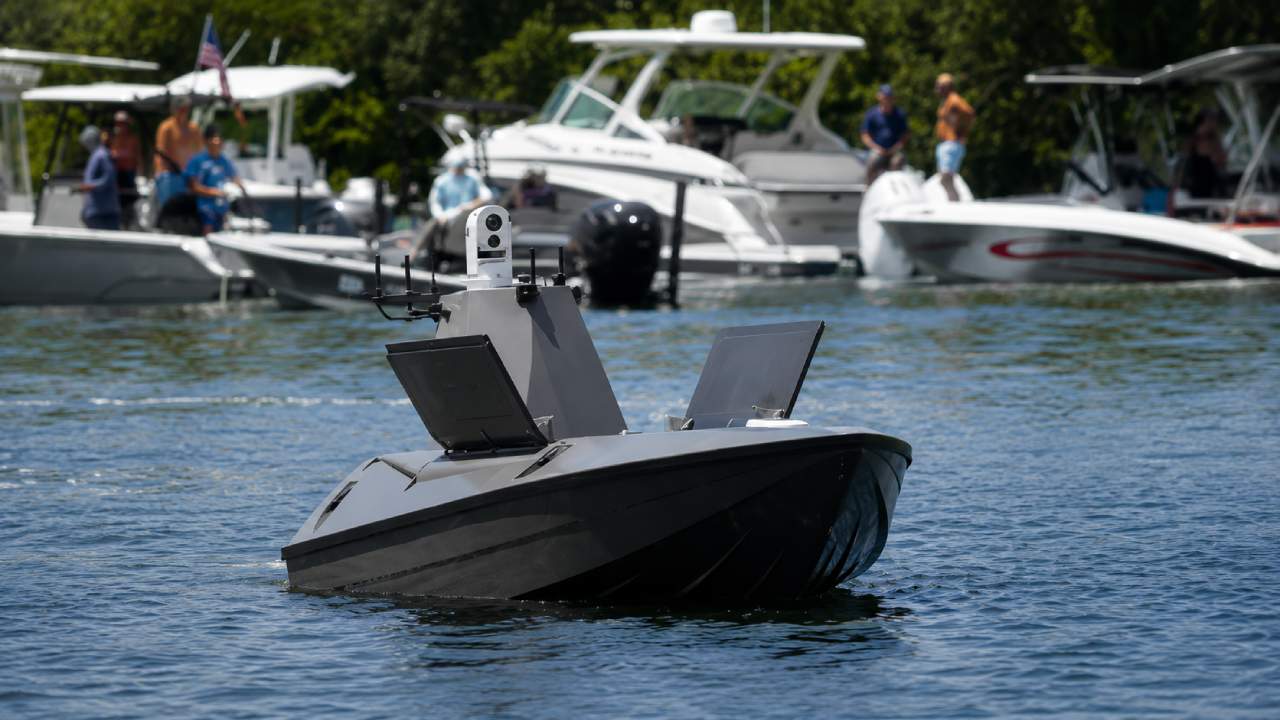
At the center of the discussion is the Corsair, an unmanned surface vessel developed to support various maritime missions. Unlike traditional rescue boats, the Corsair operates without a crew onboard. Instead, it can function autonomously or be controlled remotely by operators. The vessel measures approximately 7.3 meters in length and features a flat-deck design that allows it to carry equipment, supplies, or personnel when necessary. Furthermore, its compact profile enables it to navigate challenging maritime environments. Because of its flexibility, the Corsair has become a useful tool for surveillance, intelligence gathering, and operational support. Consequently, its role continues expanding within modern naval operations.
Key US Navy Drone Specs That Stand Out
When discussing US Navy Drone Specs, several technical features make the Corsair particularly noteworthy. The vessel can reportedly carry payloads of up to 450 kilograms, giving it significant operational versatility. In addition, it is capable of reaching speeds exceeding 35 knots, or roughly 65 kilometers per hour. This level of performance allows rapid deployment in urgent situations. Moreover, the drone is equipped with advanced navigation systems that support long-range operations. These specifications provide a balance between speed, endurance, and functionality. As a result, the Corsair can perform tasks that would otherwise require larger and more expensive platforms.
Advanced Sensors and Surveillance Capabilities
Beyond its physical specifications, the Corsair is equipped with sophisticated sensor technology. A 360-degree camera system allows operators to maintain full situational awareness during missions. Meanwhile, onboard radar systems help the vessel navigate safely across open waters. Additionally, electronic sensors can assist in monitoring communications and collecting intelligence data. These capabilities make the drone useful not only for rescue operations but also for surveillance and maritime security missions. Because modern military operations depend heavily on information gathering, advanced sensors are often just as important as speed or payload capacity. Consequently, the Corsair represents a significant step forward in unmanned maritime technology.
Why the Navy Uses Unmanned Systems
The growing use of unmanned vessels reflects broader changes in military thinking. Traditionally, rescue or reconnaissance missions required personnel to enter potentially dangerous environments. However, autonomous platforms can reduce those risks considerably. By sending an unmanned vessel into a contested area, military forces can gather information or conduct operations without immediately exposing human crews to danger. Furthermore, unmanned systems often operate at lower costs compared to conventional ships or aircraft. Therefore, they provide both strategic and economic advantages. This combination explains why many naval forces around the world are investing heavily in autonomous technologies.
The Strategic Importance of the Strait of Hormuz
The Strait of Hormuz remains one of the most strategically important waterways on the planet. A significant portion of global energy shipments passes through this narrow maritime corridor each year. Consequently, any military activity in the region tends to attract international attention. Because tensions can escalate quickly, rapid-response capabilities are essential. In this context, unmanned vessels like the Corsair offer valuable operational flexibility. Their ability to deploy quickly and operate in potentially hazardous conditions makes them particularly useful. Therefore, the recent rescue mission also highlighted the growing importance of autonomous systems in sensitive geopolitical regions.
How Technology Is Changing Rescue Missions
Rescue operations have traditionally relied on helicopters, patrol boats, and specialized personnel. While those assets remain essential, emerging technologies are creating new possibilities. Unmanned vessels can often reach dangerous locations without risking additional lives. Furthermore, remote operators can guide these systems with precision using real-time video feeds and navigation data. In the case of the Corsair, experts believe remote control likely played an important role during the mission. This approach ensured accurate positioning while maintaining safety for military personnel. As technology continues advancing, similar systems may become standard tools for future rescue operations.
The Future of US Navy Drone Technology
The success of missions involving unmanned platforms highlights a broader trend in defense innovation. Future naval operations will likely rely even more heavily on autonomous systems capable of performing surveillance, logistics, intelligence gathering, and rescue tasks. Additionally, improvements in artificial intelligence and sensor integration could further expand their capabilities. The Corsair already demonstrates how a relatively small vessel can contribute to complex operations. Looking ahead, newer generations of unmanned systems may become faster, smarter, and more adaptable. Ultimately, the evolution of US Navy Drone Specs reflects the military’s ongoing effort to improve efficiency, enhance safety, and respond more effectively to modern challenges.