Hot Topics
News
Breaking News, Brivify, Economic Uncertainty, Energy Market Trends, Energy Prices, Federal Reserve Policy, Geopolitical Tensions, Global Economic Risk, Global Energy Supply, Global News, Global Oil Market, Hot Topics, Inflation Pressure, Iran Conflict, Middle East Crisis, Oil Price Volatility, US Economy, US Inflation Outlook
The US Economy is Under Pressure Due to the Iran Conflict, with Energy Prices and Inflation in the Spotlight
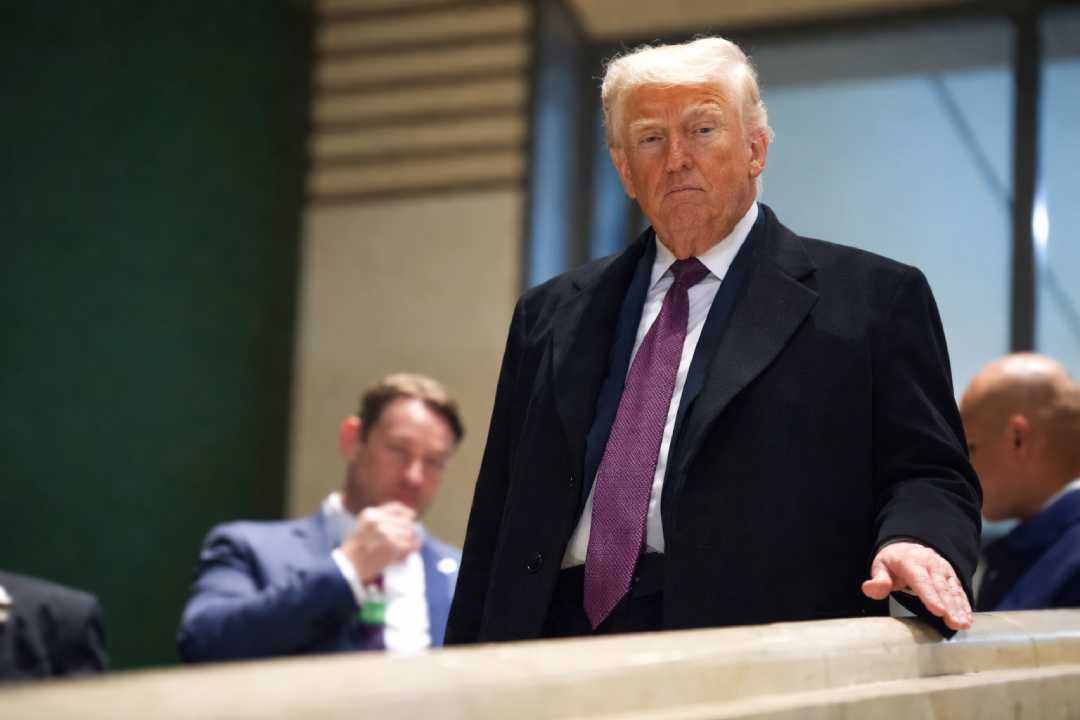
Brivify – The US Economy is Under Pressure Due to the Iran Conflict, with Energy Prices and Inflation in the Spotlight as geopolitical tensions in the Middle East intensify. Recently, analysts and investors have begun to closely monitor how global political developments affect economic stability. In particular, the ongoing conflict involving Iran has triggered a chain reaction across global markets. Energy prices have started to fluctuate again, and inflation concerns are resurfacing in policy discussions. Although the United States remains one of the strongest economies in the world, external shocks often create ripple effects that influence consumer sentiment, investment behavior, and financial policy decisions. As a result, economists now emphasize that geopolitical risk is no longer a distant factor. Instead, it has become a central variable shaping economic forecasts. Understanding this connection helps explain why the energy market and inflation indicators are suddenly back in the spotlight.
“Read Also: Rivian R2 is Here, Starting at $57,990: A New Challenge for Tesla Model Y
Rising Geopolitical Tension Reshapes Economic Sentiment
Geopolitical instability has historically influenced economic confidence, and the current Iran-related tensions are no exception. Whenever global security risks increase, financial markets typically react quickly. Investors often move their capital into safer assets such as gold, government bonds, or defensive sectors. Consequently, stock market volatility tends to rise during such periods. In this case, analysts argue that the conflict has revived fears of supply disruptions in key energy routes. Since the Middle East plays a crucial role in global oil production, even small disruptions can trigger large price movements. Moreover, economic sentiment is heavily influenced by perception. When businesses anticipate instability, they often delay investment decisions. Consumers also become cautious about spending. Therefore, the conflict does not only influence oil prices directly. It also shapes expectations, which in turn affect economic momentum in the United States.
Energy Prices React Quickly to Middle East Instability
Energy markets are particularly sensitive to geopolitical risk. As soon as tensions around Iran intensified, oil traders immediately began pricing in the possibility of supply disruptions. Even rumors about shipping routes in the Persian Gulf can influence global energy costs. As a result, crude oil benchmarks often move sharply during such geopolitical events. Higher oil prices eventually translate into higher transportation and manufacturing costs. Businesses must either absorb these increases or pass them on to consumers. In many cases, companies choose the latter option. Consequently, everyday goods and services gradually become more expensive. For the United States, this situation presents a complicated challenge. Although the country produces significant amounts of oil domestically, global oil pricing remains interconnected. Therefore, instability in the Middle East can still push American fuel prices upward.
Inflation Concerns Return to the Policy Discussion
Inflation had already been a major economic concern in recent years. However, the renewed rise in energy prices is now adding fresh pressure. When fuel costs increase, they affect almost every sector of the economy. Transportation becomes more expensive, supply chains face higher operating costs, and production expenses rise across multiple industries. As a result, inflation can accelerate even if consumer demand remains stable. Policymakers at the Federal Reserve closely watch these developments. Their primary goal is to maintain price stability while supporting economic growth. However, geopolitical-driven inflation creates a difficult balancing act. Raising interest rates too aggressively could slow economic activity. On the other hand, ignoring inflation risks could weaken consumer purchasing power. Therefore, the conflict involving Iran has reintroduced complex policy debates about how to maintain economic equilibrium.
Consumer Spending Faces New Uncertainty
Consumer behavior plays a crucial role in the American economy. In fact, household spending accounts for a significant portion of US economic activity. When energy prices rise, consumers typically adjust their budgets. For example, higher gasoline costs reduce the amount of money available for discretionary purchases. As a result, industries such as retail, travel, and entertainment may experience slower demand. Additionally, inflation expectations can influence spending psychology. If consumers believe prices will continue rising, they may either accelerate purchases or postpone large expenditures. Both behaviors can disrupt normal economic patterns. Consequently, businesses must adapt their strategies quickly. Retailers often respond by offering promotions or adjusting product pricing to maintain demand stability.
Financial Markets Respond to Economic Pressure
Financial markets act as a real-time indicator of economic sentiment. When geopolitical risks intensify, stock markets often experience short-term volatility. Investors reassess corporate earnings forecasts, energy cost projections, and global trade conditions. Consequently, sectors such as energy, defense, and commodities may perform differently from technology or consumer industries. In recent months, analysts have observed increased demand for safe-haven assets. Gold prices, for instance, often rise when geopolitical uncertainty grows. At the same time, energy companies sometimes benefit from higher oil prices. However, not all market participants react in the same way. Long-term investors often focus on structural economic resilience rather than temporary volatility.
“Read Also: Six Nations Championship and F1 Shanghai: This Weekend’s Biggest Sporting Action“
The Federal Reserve Faces a Complex Policy Environment
The Federal Reserve must carefully evaluate multiple economic signals before adjusting monetary policy. On one hand, higher energy prices may push inflation upward. On the other hand, geopolitical instability could slow global economic growth. These two forces create conflicting pressures on policymakers. For example, if inflation rises significantly, the central bank may consider maintaining higher interest rates for longer periods. However, prolonged tight monetary policy can also limit business investment and job creation. Therefore, the Federal Reserve must interpret economic data with caution. Policymakers frequently emphasize that they rely on incoming data rather than reacting to short-term market noise. Nevertheless, geopolitical events inevitably shape economic expectations.
Global Energy Markets Influence Domestic Stability
Although the United States has expanded its domestic energy production in recent years, global markets still play a dominant role. Oil prices are determined by international supply and demand dynamics. Therefore, instability in major producing regions can quickly influence domestic prices. Additionally, global shipping routes remain critical for energy distribution. The Strait of Hormuz, for instance, is one of the most important oil transit chokepoints in the world. Any disruption in this region can significantly affect global supply. Consequently, American policymakers and energy analysts closely monitor developments in the Middle East. Maintaining stable energy flows remains essential for economic stability.
Long-Term Economic Resilience Remains a Key Factor
Despite current pressures, many economists argue that the US economy still demonstrates significant resilience. The country benefits from diversified industries, strong financial institutions, and robust domestic demand. Moreover, technological innovation continues to drive productivity improvements across multiple sectors. Nevertheless, global events can temporarily disrupt economic momentum. The Iran conflict serves as a reminder that geopolitical risks remain deeply connected to economic performance. For policymakers and investors alike, the challenge lies in balancing short-term volatility with long-term strategic planning. Ultimately, understanding how geopolitical tensions influence energy markets and inflation helps explain why the US economy remains under careful observation today.