Thailand-Cambodia War Leaves 10 Dead and Forces 140,000 to Flee

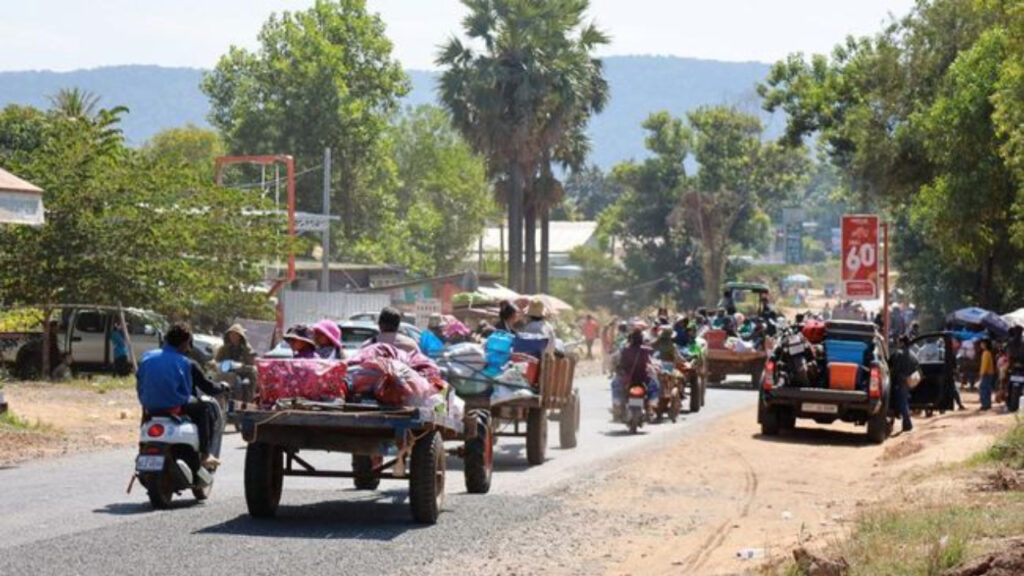
Brivify – The Thailand-Cambodia War has entered its most dangerous chapter yet as confrontations spread across five border provinces on Tuesday, intensifying fears of broader regional instability. Although skirmishes along the contested frontier have occurred for years, this week’s escalation marks the deadliest chapter since the brutal clashes in June 2025. According to AFP, at least 10 soldiers and civilians from both nations have been killed, while approximately 140,000 residents have fled to avoid artillery fire and aerial assaults. As reports surfaced, each government blamed the other for reigniting the conflict, deepening public anxiety and complicating diplomatic efforts. From a strategic perspective, the violence signals a worrying shift: both countries appear increasingly willing to use heavier weaponry, despite international pressure to de-escalate.
“Read also: Walking Into Angola’s Past: Inside the Slavery Museum That Honors Pain, Memory, and Resistance“
UNESCO World Heritage Site Becomes the Center of a Devastating Attack
In one of the most alarming developments, Cambodian forces launched attacks near the Preah Vihear Temple, a UNESCO World Heritage site long at the heart of territorial disputes. A grenade explosion killed a Thai soldier stationed near the temple, while separate indirect fire claimed another life in Surin province. Moreover, Thailand has accused Cambodia of deploying drones to provoke defensive responses. These claims, whether entirely accurate or influenced by wartime rhetoric, reveal how sacred cultural locations have become entangled in the broader struggle for authority. Tragically, the conflict risks causing irreversible damage to heritage sites that hold immense historical value for both nations.
Thailand’s Leadership Signals a Hardline Approach to Continued Conflict
Thailand’s Prime Minister, Anutin Charnvirakul, responded to the renewed violence with strong political resolve. He urged citizens to support the military without wavering, stating, “We cannot stop now.” His remarks reflect not only national sentiment but also the broader geopolitical stakes of the Thailand-Cambodia War. During a press briefing, Navy spokesperson Parat Rattanachaiphan added that Thai forces identified Cambodian troops, settlements, and weapons bases near contested coastal areas in Trat province. According to him, these discoveries justified new military operations intended to “drive them out.” Although such statements aim to project confidence, they also hint at the escalating complexity of the conflict.
Civilian Stories Reveal the Human Toll Behind Military Movements
While military leaders dominate headlines, the voices of civilians reveal the emotional burden carried by those caught between warring nations. Cambodian villager Poan Hay, 55, has now fled her border home for the fourth time as jet fighters roared overhead. Her exhaustion was palpable as she expressed hopes that the international community would intervene. Meanwhile, Thailand reported over 21,000 displaced individuals from its border provinces. Their stories illustrate how war erodes not only safety but also dignity, stability, and long-standing community ties. Although the world often views conflicts through casualty counts, the lived experiences of displaced families bring irreplaceable depth to understanding the crisis.
Local Residents in Thailand Face Daily Uncertainty and Reluctant Resilience
However, not all civilians have chosen to evacuate. In Thailand, a 56-year-old farmer named Samlee remained at his home to protect his livestock despite daily risks. His plea, “When will this end?” reflects widespread frustration as the Thailand-Cambodia War disrupts livelihoods and strains mental health. Similarly, food shop worker Sutida Pusa, 30, continues oscillating between shelters and her home to protect her belongings. Although she noted this week’s fighting is quieter than earlier clashes, she admitted she does not trust the situation. Her cautious behavior is emblematic of families forced to gamble between financial survival and personal safety.
“Read also: How People Can Shape Global Politics Through Game Theory and Civic Power“
Cambodia and Thailand Struggle to Control Narratives Amid Ongoing Uncertainty
As in many regional conflicts, both governments are aggressively shaping public perception. While Thailand accuses Cambodia of drone provocations and illegal encroachment, Cambodian authorities claim Thai forces initiated several offensives. This informational tug-of-war complicates international mediation because accurate assessments are increasingly difficult to verify. Nevertheless, observers note that both governments attempt to leverage global sympathy by emphasizing their own civilian suffering. Such behavior, although common in wartime, also deepens the urgency for independent verification from international organizations.
International Community Faces Growing Pressure to Intervene Diplomatically
Given the scale of displacement and the symbolic significance of the affected heritage sites, international actors especially ASEAN are under pressure to step in. However, diplomatic intervention remains challenging due to entrenched historical grievances and the rapid pace of military escalation. Although humanitarian agencies have mobilized to assist evacuees, they continue to face obstacles in accessing contested zones. Many analysts argue that without strong international mediation, the Thailand-Cambodia War could expand into a prolonged and destabilizing border conflict with long-term implications for Southeast Asia.
The Path Forward Remains Uncertain as Conflict Shows No Signs of Slowing
For now, the future of the Thailand-Cambodia War remains deeply uncertain. While both sides have experienced high casualties and widespread displacement, neither has shown willingness to halt operations. The pattern of attack and retaliation suggests an entrenched conflict driven by territorial disputes, political pressure, and long-standing mistrust. Nevertheless, citizens continue to hope for a ceasefire especially those forced to abandon homes and livelihoods. As the world watches, the region stands at a dangerous crossroads, where miscalculation could ignite an even larger humanitarian and geopolitical crisis.