Russian General Killed in Moscow Car Bomb Shocks Security Establishment

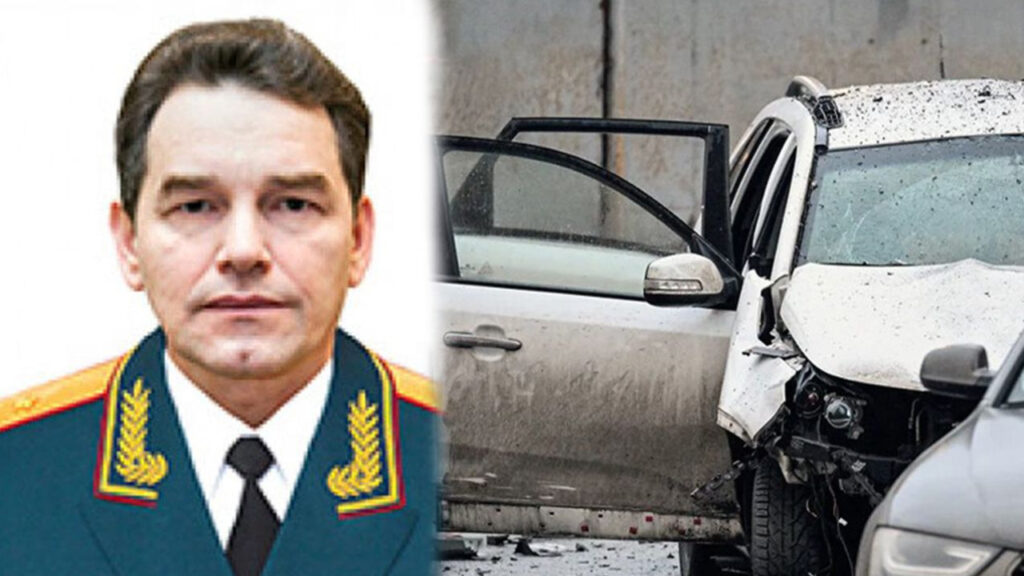
Brivify – The news that a Russian general was killed by a car bomb in Moscow has sent shockwaves through Russia’s political and military circles. Early Monday morning, an explosive device detonated beneath a vehicle in a residential area of the capital, killing Lt. Gen. Fanil Sarvarov instantly. As a result, the incident has intensified fears about internal security and the vulnerability of senior officials inside Russia itself.
“Read also: South Korea’s Nuclear Submarine Ambition Could Reshape Pacific Power“
How the Moscow Car Bomb Attack Unfolded
According to Russian investigators, attackers placed an explosive device beneath the chassis of the vehicle used by Sarvarov. When the bomb detonated, it destroyed the car instantly and killed him at the scene. State media later released footage showing twisted metal and debris scattered across a quiet parking area. Unlike random acts of violence, this attack followed a precise and targeted method, suggesting careful surveillance and planning rather than opportunity.
Who Was Fanil Sarvarov Inside Russia’s Military Structure
Before the attack, Sarvarov led the armed forces’ operational training department for nearly a decade. During that period, he oversaw readiness programs and strategic coordination, including previous operations in Syria. As a result, his role placed him among the most influential planners within Russia’s military hierarchy. Losing such a figure does not merely create a vacancy; it disrupts institutional memory and ongoing operational planning.
Kremlin Reaction Highlights the Gravity of the Incident
The Kremlin quickly informed President Vladimir Putin through security channels, underscoring how seriously the state views the killing. Officials did not treat the incident as isolated crime. Instead, they framed it as a potential act of foreign-backed terrorism. By doing so, the government signaled both internal alarm and an external warning to perceived adversaries.
Russian Investigators Point Fingers at Ukraine
Investigators openly suggested that Ukrainian special services may have orchestrated the attack. Although authorities continue to examine multiple motives, officials emphasized a pattern that links this killing to previous incidents. Since 2022, Moscow has seen several targeted assassinations of senior figures connected to the war. Each case deepens suspicion and fuels retaliatory rhetoric.
A Pattern of Targeted Killings in the Russian Capital
The Russian general killed narrative does not stand alone. In recent years, Moscow has witnessed car bombs, remotely detonated devices, and close-range attacks aimed at military and political figures. Notably, earlier victims included senior operational commanders and influential pro-war personalities. Together, these incidents suggest a sustained campaign rather than sporadic violence.
“Read also: Slow Epstein Files Disclosures Ignite Fresh Political Turmoil Around Trump“
What This Means for Russia’s Internal Security
This latest killing exposes vulnerabilities in Moscow’s internal security apparatus. Despite heavy surveillance and intelligence resources, attackers still managed to strike a protected individual. Consequently, public confidence in domestic security may erode, especially as attacks occur far from front lines. The state now faces pressure to tighten protections without projecting weakness.
Broader Implications for the Ukraine Conflict
Beyond Moscow, the killing sends a strategic message. Targeted assassinations aim not only to remove individuals but also to create psychological pressure within leadership circles. If such attacks continue, they could influence decision-making, escalate retaliatory measures, and further entrench the conflict’s shadow-war dimension.
A Turning Point in Urban Warfare Tactics
Ultimately, the death of Sarvarov reflects how modern conflicts increasingly extend into cities through covert operations. As the war evolves, these tactics reshape how nations define battlegrounds and security. For now, the Russian general killed in Moscow stands as a stark reminder that the consequences of war rarely remain confined to distant fronts.