Iran Strikes Saudi Arabia After Months of Relative Calm
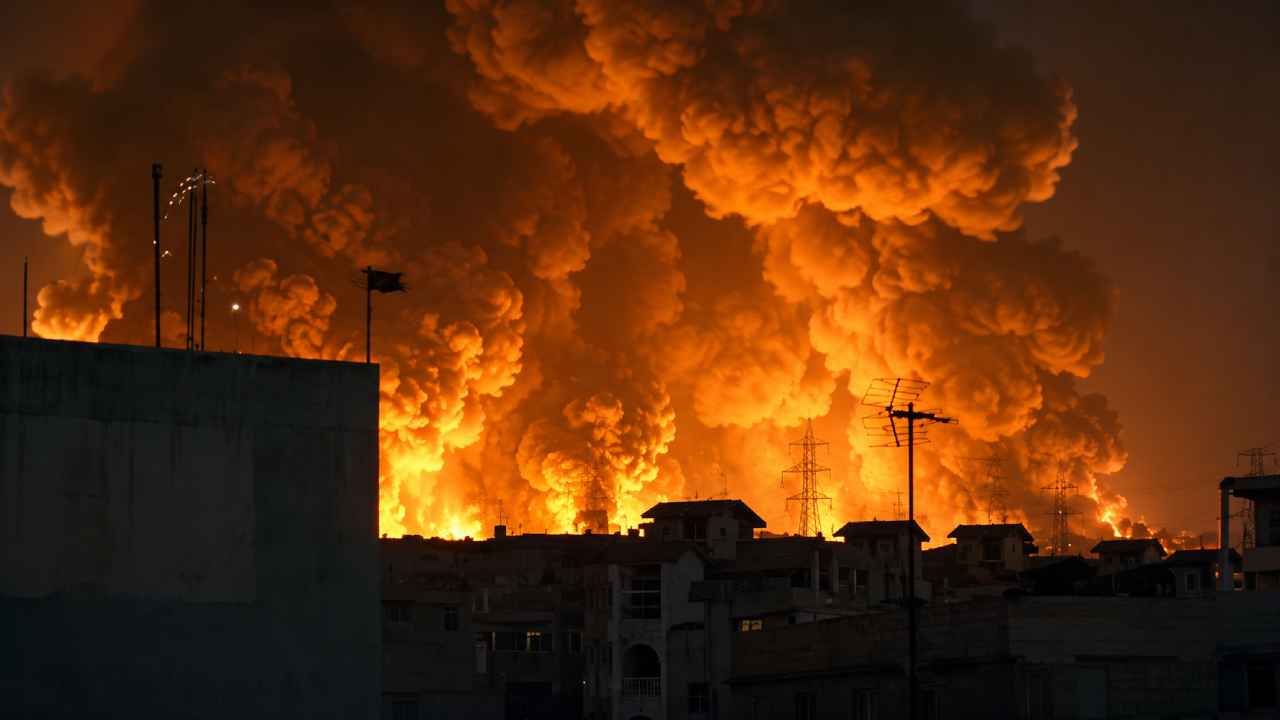
Brivify – Iran Strikes Saudi Arabia once again became a major regional headline after reports emerged of a ballistic missile attack aimed at a United States military facility inside the kingdom. The reported strike came after nearly four months without a direct Iranian attack on Saudi territory. As a result, the event quickly revived fears of a wider Gulf conflict. Details about the target, interception, casualties, and damage remained limited during the first hours. Even so, the timing was significant. The attack followed several nights of United States strikes on Iranian military and infrastructure sites. It also came as tensions around the Strait of Hormuz continued to rise.
Read Also: Volkswagen Unveils Its New Compact Electric SUV to Expand EV Lineup
A Sudden End to Months of Relative Calm
The reported missile launch ended a period of relative calm between Iran and Saudi Arabia. Saudi territory had previously faced Iranian missile attacks during an earlier stage of the regional conflict. However, direct strikes had slowed during the following months. That pause gave the Gulf region a limited sense of stability, although tensions never fully disappeared. The latest attack therefore carries more meaning than a single military event. It shows how quickly a fragile calm can collapse when conflict between larger powers intensifies. In practical terms, Saudi Arabia has again become part of a wider battlefield shaped by the rivalry between Iran and the United States.
What Is Known About the Reported Missile Attack?
Early reports said Iran launched a ballistic missile toward a United States military base in Saudi Arabia. The original claim was attributed to an American official cited by Axios. However, the initial report did not identify the exact installation. It also provided no confirmed information about casualties or physical damage. Therefore, the safest interpretation is that the attack was reported but not yet fully documented in public. This distinction matters because information often changes during an active military crisis. Governments may delay details for security reasons, while social media reports can spread faster than official verification. For readers, following confirmed updates remains more useful than relying on dramatic early claims.
Why Iran Strikes Saudi Arabia During This Conflict
The reported attack appears closely linked to the presence of American military forces and facilities across the Gulf. Tehran has repeatedly said it will target assets connected to Washington when the United States attacks Iranian territory. Therefore, the missile was likely aimed at an American military interest rather than Saudi Arabia alone. Still, any strike inside the kingdom directly affects Saudi security and sovereignty. It also places Riyadh in a difficult position. Saudi leaders must protect national territory while avoiding actions that could pull the kingdom deeper into the war. This tension explains why Iran Strikes Saudi Arabia is a much broader story than a missile launch. It reflects the risks faced by every Gulf country hosting American forces.
United States Strikes Increase Pressure on Tehran
The missile report came as the United States continued a sustained military campaign against Iran. U.S. Central Command said recent operations targeted Iranian surveillance systems, logistics networks, underground weapons storage, and maritime capabilities. Official CENTCOM updates also confirmed several rounds of strikes during July 2026. Meanwhile, independent reporting described attacks on locations near Bandar Abbas, Jask, Sirik, Bushehr, and other strategic areas. Washington said the campaign aimed to weaken Iran’s ability to conduct further operations. However, Iran described some attacks as strikes on civilian infrastructure. These competing claims have deepened anger and made diplomatic compromise more difficult.
Gulf Countries Face Growing Security Risks
Saudi Arabia is not the only Gulf country affected by the expanding conflict. Iran has also claimed attacks against American-linked military locations in Bahrain, Kuwait, Qatar, Jordan, and other areas. Kuwait reported disruptions involving important water and electricity infrastructure. Bahrain activated warning sirens, while Jordan said its air defenses intercepted Iranian missiles entering its airspace. Some Iranian military claims have not received independent confirmation from the United States. Nevertheless, the pattern shows that the conflict has moved beyond direct exchanges between Tehran and Washington. Countries across the region now face threats to airports, military facilities, energy sites, and public services.
The Strait of Hormuz Remains a Global Concern
The Strait of Hormuz is one of the most important shipping routes in the world. A major share of internationally traded oil and gas passes through this narrow waterway. Therefore, military escalation around the strait can affect energy prices far beyond the Middle East. Recent attacks, blockades, and maritime incidents have already raised concern among traders and governments. Oil prices also climbed as investors reacted to the growing risk. In my view, this economic impact explains why the conflict attracts such intense global attention. A missile attack may happen in one country, yet the effects can reach fuel markets, transportation costs, and household expenses elsewhere.
Civilian Infrastructure Becomes Increasingly Vulnerable
One of the most worrying developments is the growing danger to civilian infrastructure. Reports from Iran described damage to bridges, railway lines, power networks, and other essential facilities. Kuwait also reported damage to electricity and water systems during Iranian attacks. This trend creates serious humanitarian risks because Gulf countries depend heavily on energy-intensive desalination plants for drinking water. Even a short disruption can affect large urban populations. Military planners may describe some facilities as strategically useful. However, the human consequences can be severe when electricity, water, transport, or medical services stop working. Protecting civilians should remain a priority regardless of which side carries out the attack.
Air Defense Systems Return to the Spotlight
The latest escalation has renewed attention on Saudi and regional air defenses. Saudi Arabia has invested heavily in systems designed to detect and intercept ballistic missiles and drones. It also conducts joint defense exercises with American forces. However, no air-defense network can guarantee complete protection during repeated or coordinated attacks. A large wave of missiles and drones can place significant pressure on radar systems, interceptors, and command centers. Therefore, defense cooperation between Gulf countries may become even more important. Shared intelligence and early warning systems can provide more time to respond. Still, air defense treats the symptoms of conflict rather than its political causes.
Read Also: Lionel Messi Chases Historic World Cup Glory as Argentina Face Spain
Saudi Arabia Faces a Difficult Strategic Decision
Saudi Arabia now faces a difficult balance between deterrence and restraint. A weak response could encourage further attacks. In contrast, a major military response could expose Saudi cities and energy facilities to more danger. The kingdom must also consider its economic ambitions, international partnerships, and previous efforts to normalize relations with Iran. Those diplomatic efforts showed that Riyadh preferred stability over permanent confrontation. Yet the latest missile report tests that strategy. Saudi leaders may strengthen defenses while avoiding immediate escalation. From a strategic perspective, this cautious approach could protect long-term national interests more effectively than a rapid emotional response.
Why the Latest Attack Could Change Regional Calculations
The phrase Iran Strikes Saudi Arabia captures a dangerous turning point because the attack could change how regional governments assess the war. Gulf states may increase military coordination with Washington. They may also place greater pressure on Tehran through diplomatic or economic channels. At the same time, some countries may seek stronger mediation to prevent further strikes. The event also reminds investors that energy infrastructure remains exposed to geopolitical risk. Therefore, even a limited attack can reshape defense planning, shipping decisions, and oil-market expectations. The key question is whether the strike remains an isolated warning or becomes the start of another sustained campaign.
Diplomacy Remains the Only Sustainable Exit
Military power may damage weapons, bases, and infrastructure, but it rarely creates lasting regional stability by itself. The current escalation shows how quickly retaliation can produce another round of retaliation. Iran attacks American-linked assets, the United States strikes Iran, and neighboring countries absorb the consequences. This cycle becomes harder to stop after every new incident. For that reason, mediation remains essential. Any serious diplomatic effort must address maritime security, attacks on civilian infrastructure, foreign military bases, and guarantees against further escalation. Until such an agreement becomes possible, the Gulf will remain vulnerable to sudden attacks and unpredictable responses.