Exploring the Heliosphere, NASA’s New Mission to Unlock Cosmic Secrets
Brivify – Imagine the entire solar system wrapped inside a giant, invisible cocoon. That cocoon is the heliosphere, a vast bubble formed by the constant breath of the sun, known as the solar wind. Without it, Earth and its planetary neighbors would be bombarded with cosmic radiation from the Milky Way. It is not just a scientific concept it is the silent shield that has made life on Earth possible. The heliosphere is both guardian and mystery, shaping our survival while inviting us to explore its secrets.
“Read also: OpenAI and Nvidia Forge $100 Billion Partnership to Power the Future of AI“
How the Heliosphere Shapes Habitability
What makes the heliosphere so fascinating is its role in life itself. On Earth, the magnetic field works in tandem with the heliosphere to protect us from deadly cosmic rays. On Mars, however, the lack of a strong shield may have contributed to its barren landscape. This connection between space physics and biology reveals that studying the heliosphere is not just about astrophysics it is about understanding why we are here, and whether other planets could have once shared the same protective advantage.
From Theory to Discovery
Back in the 1950s, scientists began to wonder if the solar wind could create a cosmic boundary. Their suspicions were confirmed when Mariner 2 detected solar wind near Venus in 1962. Later, the Pioneer missions and the legendary Voyager probes gathered more evidence. Voyager 1 crossed the heliosphere in 2012, and Voyager 2 followed in 2018, both carrying humanity’s first messages into interstellar space. What was once a theory is now mapped in fragments, but much of its true form remains hidden.
Introducing IMAP: The Interstellar Mapper
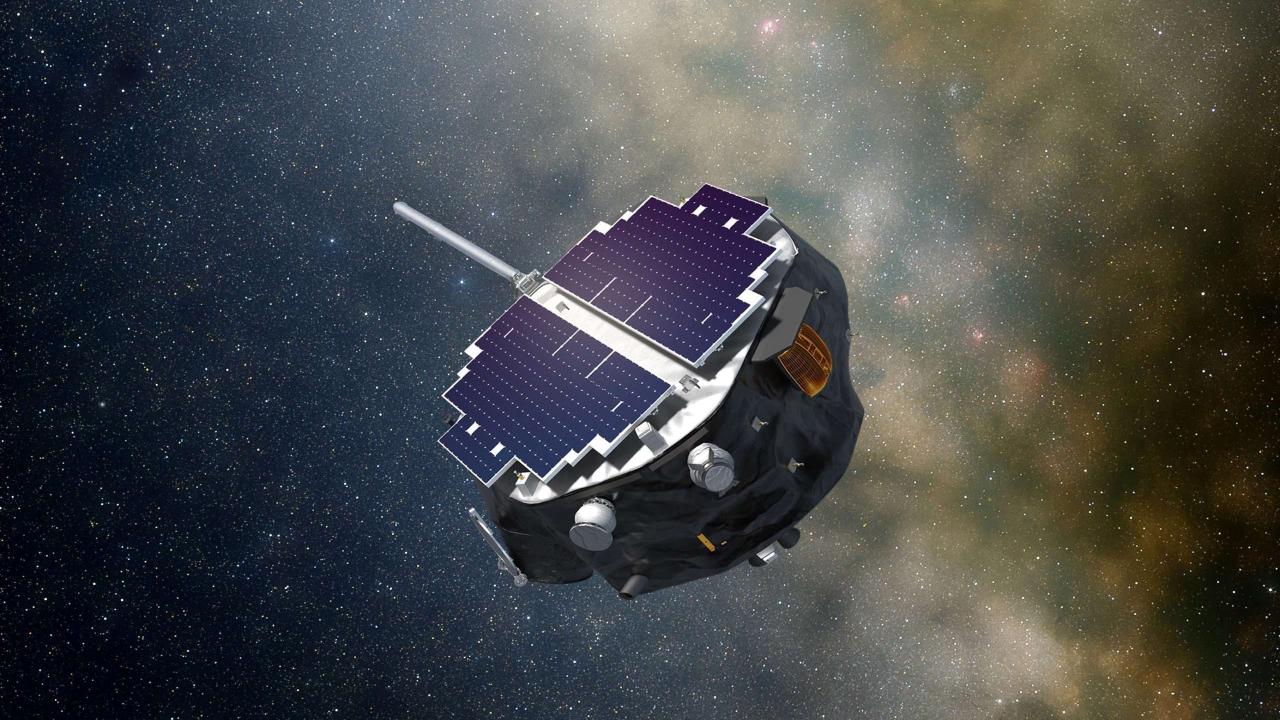
Now, NASA’s IMAP Interstellar Mapping and Acceleration Probe has launched with a daring mission. It will examine how solar wind originates, how it interacts with interstellar space, and how energetic particles travel through the heliosphere. Unlike its predecessors, IMAP carries faster imaging tools with thirty times higher resolution. This means scientists will be able to create dynamic, evolving maps of the heliosphere, transforming it from a vague outline into a detailed portrait of our cosmic shield.
Unraveling the Shape of the Heliosphere
Is the heliosphere shaped like a comet with a trailing tail, or is it more of a rounded bubble? Scientists have debated this for decades. Voyager offered glimpses, but its journey only passed through narrow points of the boundary. IMAP will go further, tracing neutral atoms back to their origins and helping reveal the heliosphere’s true geometry. By answering this question, we gain not only a map but also insight into how other stars shape their own cosmic shields.
Space Weather and Earthly Consequences
The heliosphere cannot block everything. Solar storms, explosive outbursts of plasma from the sun, can break through and strike Earth. These storms can disable satellites, disrupt communications, and threaten astronauts in orbit. By working alongside missions like SWFO-L1 and the Carruthers Geocorona Observatory, IMAP will help predict space weather with greater accuracy. Better forecasting means protecting power grids, flights, and digital networks on which modern society depends. In this way, the heliosphere is more than a cosmic bubble it is directly tied to our daily lives.
“Read more: New Concert Guidelines in Malaysia: Dress Modestly and Show Respect“
The Human Spirit Behind the Science
Every mission to study the heliosphere is driven by human curiosity. Scientists like Dr. David McComas at Princeton and Dr. Joe Westlake at NASA describe this work not as abstract physics, but as essential knowledge for everyone. We live inside a bubble created by our star, yet few people realize how dependent we are on it. Missions like IMAP remind us that exploration is not just about leaving Earth it is about understanding the invisible structures that make Earth habitable in the first place.
Astrospheres Beyond Our Sun
What makes the heliosphere even more intriguing is that our sun is not unique. Other stars generate similar shields, called astrospheres. Some glow brightly in telescope images, stretching across space like luminous halos. By comparing our heliosphere to these distant cousins, astronomers may discover whether our protective bubble is ordinary or exceptional. The answer could even guide the search for alien worlds capable of supporting life. Studying the heliosphere, then, is part of a universal question: how many other worlds are sheltered like ours?
A New Chapter in Cosmic Exploration
As IMAP begins its journey a million miles from Earth, humanity stands ready for new discoveries. Real-time solar wind measurements, particle tracking, and boundary mapping will deepen our understanding of the heliosphere like never before. This mission is more than data collection it is a story of resilience, curiosity, and our quest to grasp the hidden forces that shape existence. The heliosphere, once an abstract theory, is becoming a living frontier. And as we map its contours, we also map our place in the cosmos.