Hot Topics
News
72 Hour Emergency Guidelines, Breaking News, Brivify, Europe Emergency Preparedness, European Civil Defense, Geopolitical Risk Analysis, Global Conflict Concerns, Global Economic Impact, Global Security Tensions, Hot Topics, Indonesia Foreign Policy, International Crisis Preparedness, International Security News, World War III Predictions
How Did World War III Predictions Come About? Europe Prepares 72-Hour Emergency Guidelines, Indonesia Urged to Be Vigilant
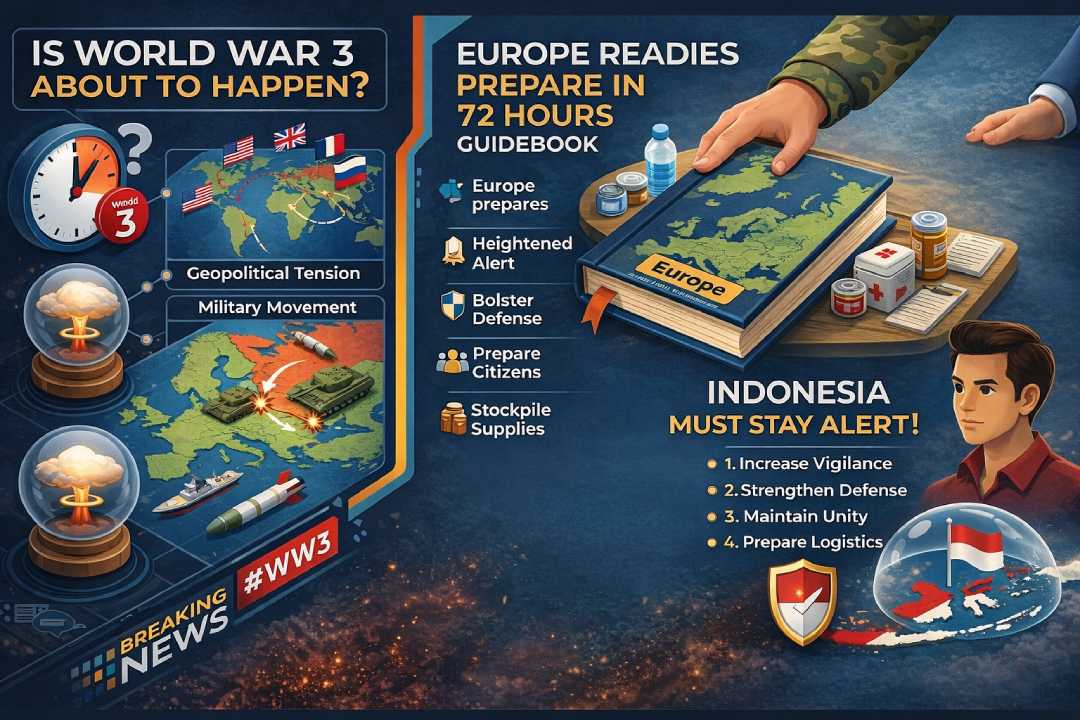
Brivify – How Did World War III Predictions Come About? Europe Prepares 72-Hour Emergency Guidelines, Indonesia Urged to Be Vigilant suddenly became widely discussed after several European governments began promoting emergency preparedness for citizens. At first glance, the news sounded dramatic. However, when examined carefully, the initiative was not a declaration of war preparation. Instead, it was a civil-defense strategy designed to help communities remain resilient during unexpected crises. Nevertheless, the timing of the announcement—amid rising geopolitical tension, cyber threats, and global supply uncertainty, sparked intense speculation across media platforms. Consequently, many people started asking whether a larger conflict could occur. In Indonesia, the conversation quickly spread on social media and news portals. People wondered if such preparations indicated a deeper geopolitical shift. From a global perspective, however, preparedness campaigns like these often appear during uncertain times. Therefore, understanding the context behind the policy is essential before drawing conclusions about the possibility of a world war.
“Read Also: The Origin of the Ford Mustang Name: Was It Really Inspired by a Wild Horse?“
Why Europe Introduced a 72-Hour Emergency Preparedness Guideline
To understand How Did World War III Predictions Come About? Europe Prepares 72-Hour Emergency Guidelines, Indonesia Urged to Be Vigilant, it is important to examine the real purpose of the policy. European governments have increasingly focused on what experts call civil resilience. In simple terms, this concept emphasizes preparing citizens to survive independently for the first three days of a crisis. Those first seventy-two hours are considered critical because emergency services often need time to stabilize the situation. Consequently, governments encourage people to keep basic supplies such as water, food, medical kits, and communication tools. Although some observers interpreted the campaign as preparation for war, the official explanation is broader. Authorities mention potential disasters such as cyberattacks, power outages, extreme weather, or supply disruptions. In other words, the guidelines are part of modern risk management. Nevertheless, because the world currently faces geopolitical tension in several regions, public perception quickly connected the preparedness plan with predictions of a possible global conflict.
How Global Tensions Sparked Speculation About World War III
Another factor that explains How Did World War III Predictions Come About? Europe Prepares 72-Hour Emergency Guidelines, Indonesia Urged to Be Vigilant is the current international climate. Over the past few years, geopolitical competition between major powers has intensified. Conflicts in several regions, along with economic rivalry and technological competition, have made global politics more fragile. As a result, analysts and commentators often discuss worst-case scenarios in media discussions. When Europe released its emergency preparedness advice, the message arrived in an already tense environment. Consequently, the public narrative quickly shifted from “preparedness” to “possible war.” Social media amplified the discussion even further. Viral posts suggested that governments were secretly anticipating a major conflict. However, most policy experts argue that preparedness does not equal prediction. Instead, they believe it reflects a practical approach to risk management. Still, the psychological impact of such news is powerful, and it easily fuels speculation about future global security challenges.
Why the 72-Hour Concept Is Common in Crisis Planning
Interestingly, the seventy-two-hour rule mentioned in How Did World War III Predictions Come About? Europe Prepares 72-Hour Emergency Guidelines, Indonesia Urged to Be Vigilant is not unique to Europe. In fact, many countries have adopted similar recommendations. Disaster management experts often explain that the first three days after a major emergency are the most chaotic. Infrastructure may fail, transportation may stop, and communication networks may temporarily collapse. Therefore, households are encouraged to maintain minimal supplies to sustain themselves during that critical period. For example, Japan promotes disaster preparedness kits because of earthquake risks, while the United States recommends similar emergency readiness through federal agencies. Europe’s version simply reflects the same philosophy. However, when such policies appear during a time of geopolitical tension, the interpretation changes dramatically. Instead of seeing it as routine safety planning, people may perceive it as a signal that governments expect conflict or instability in the near future.
The Role of Media and Social Platforms in Amplifying Fear
Media dynamics also played a significant role in shaping How Did World War III Predictions Come About? Europe Prepares 72-Hour Emergency Guidelines, Indonesia Urged to Be Vigilant. In today’s digital ecosystem, information spreads faster than ever. A single headline can travel across continents within minutes. Consequently, nuanced policy announcements can quickly transform into alarming narratives. For example, some online posts framed the emergency guideline as proof that Europe was preparing for global war. Although these claims lacked evidence, the dramatic tone attracted attention and shares. This pattern reflects a broader challenge in modern journalism. News audiences often respond more strongly to emotional or alarming headlines. As a result, balanced explanations sometimes receive less visibility than sensational interpretations. In my view, this phenomenon highlights the importance of media literacy. Readers must analyze the original policy context before assuming that dramatic geopolitical conclusions are inevitable.
“Read Also: Middle East Conflict Triggers Major Disruptions to International Flights“
Could Indonesia Be Affected by a Global Conflict?
Many Indonesians asked whether How Did World War III Predictions Come About? Europe Prepares 72-Hour Emergency Guidelines, Indonesia Urged to Be Vigilant means Indonesia would face direct danger. In reality, Indonesia is geographically distant from most potential conflict zones. Furthermore, the country maintains a foreign policy principle known as “free and active diplomacy.” This approach emphasizes neutrality and peaceful cooperation rather than military alliances. Therefore, Indonesia is unlikely to become directly involved in global military conflict. However, indirect effects are still possible. Global crises often influence economic systems, energy prices, and international trade. For instance, tensions in major energy regions can increase oil prices worldwide. Consequently, Indonesia may experience higher fuel costs or supply fluctuations. Financial markets may also react, affecting exchange rates and investment flows. In other words, while Indonesia may remain militarily neutral, economic ripple effects could still reach domestic markets.
Economic Implications for Indonesia in a Global Crisis Scenario
Economic analysts often highlight that the biggest impact of How Did World War III Predictions Come About? Europe Prepares 72-Hour Emergency Guidelines, Indonesia Urged to Be Vigilant would likely occur through global markets. Modern economies are deeply interconnected. Therefore, disruptions in one region can quickly influence others. If geopolitical tensions escalate, energy and commodity prices usually become volatile. Indonesia, which imports certain energy resources, could feel the pressure through rising costs. At the same time, investors typically move capital toward safer assets such as gold or U.S. treasury bonds during uncertain periods. Consequently, emerging markets sometimes experience currency fluctuations. Nevertheless, Indonesia’s diversified economy and large domestic market provide some resilience. Government institutions also maintain financial stabilization policies to mitigate external shocks. In this sense, the situation should be seen less as an imminent threat and more as a reminder of how interconnected the global economy has become.
Why Preparedness Does Not Always Mean War Is Coming
Finally, the discussion surrounding How Did World War III Predictions Come About? Europe Prepares 72-Hour Emergency Guidelines, Indonesia Urged to Be Vigilant illustrates a broader misunderstanding about preparedness policies. Governments frequently design contingency plans for unlikely scenarios. These strategies exist precisely to reduce panic and maintain order if unexpected events occur. In other words, preparation is a sign of responsibility rather than a prediction of disaster. Europe’s emergency guidelines reflect the modern reality that crises can take many forms, from cyberattacks to natural disasters. Therefore, encouraging citizens to remain prepared is simply part of comprehensive national resilience planning. From my perspective, the real lesson from this story is not about war but about awareness. A society that understands risk and prepares calmly is far more stable than one that reacts only when crises suddenly appear.