Marco Bezzecchi Reveals Terrifying 300 KM/H Duel With Marc Marquez
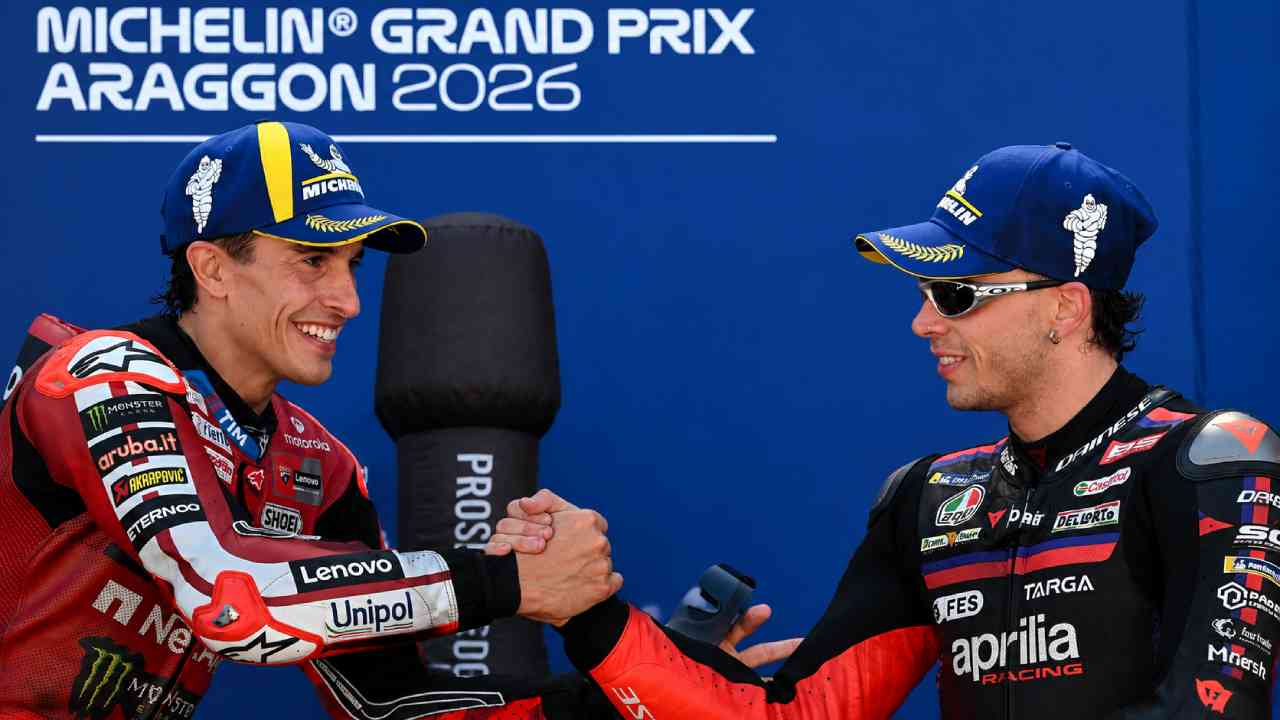
Brivify – Marco Bezzecchi produced one of the most memorable moments of the 2026 Aragon Grand Prix when he fought Marc Marquez at more than 300 km/h. The Aprilia rider had started from pole and was determined to defend the lead. However, Marquez soon brought his Ducati into striking distance. Their battle reached another level on lap six. After Marquez attacked at Turn 15, Bezzecchi found stronger acceleration on the exit and pulled alongside him. Suddenly, the two MotoGP machines were racing almost elbow-to-elbow down the long back straight. The speed alone made the scene spectacular. Yet the aerodynamic behavior of both motorcycles made it even more dramatic. Instead of holding a predictable distance, the bikes appeared to move toward and away from each other. Bezzecchi later explained that the airflow created a strange sensation as he tried to move away from his rival.
Read Also: Toyota GR Yaris vs VW Golf GTI: Which Hot Hatch Wins?
A Pole Position Put Bezzecchi at the Center of Attention
Bezzecchi had already shown impressive speed before Sunday’s race. During qualifying, the Italian shattered the MotorLand Aragón lap record with a 1:44.962, becoming the first rider to break the 1:45 barrier at the circuit. That performance earned him pole position ahead of Marc and Alex Marquez. Therefore, his place at the front of Sunday’s race was hardly a surprise. Still, race pace presented a different challenge. Bezzecchi admitted that he quickly realized he could not create the gap he wanted. Marc Marquez and Pedro Acosta remained close enough to threaten him. Nevertheless, Bezzecchi did not simply surrender the lead. Instead, he tried to make his rivals work for every opportunity. That aggressive approach eventually created the defining battle of the afternoon. For Aprilia, his pace also offered another encouraging sign that the bike could challenge Ducati and KTM at the front.
Marc Marquez Launches His Attack on Lap Six
The decisive sequence began on lap six. Marquez attacked Marco Bezzecchi at Turn 15 and moved his Ducati toward the inside. Normally, such a move might have ended the contest before the straight. This time, however, Bezzecchi responded immediately. His Aprilia accelerated strongly out of the corner, allowing him to draw alongside Marquez. Both riders then charged down the back straight at more than 300 km/h. Neither wanted to give away the racing line before the braking zone. As a result, they remained remarkably close while their motorcycles continued accelerating. The official MotoGP coverage highlighted the sequence as a defining moment of the Aragon race. From a racing perspective, it showed how quickly an attempted overtake can become a completely different battle. Marquez had gained the initial advantage, but Bezzecchi’s exit speed turned the move into a high-speed drag race that neither rider could completely control.
Aerodynamic Turbulence Creates a Frightening Effect
Modern MotoGP motorcycles rely heavily on aerodynamic devices. Wings and other bodywork help control wheelies and improve performance. However, those systems also disturb the surrounding airflow. During the Marquez-Bezzecchi duel, that turbulent air produced an unusual effect. Bezzecchi explained that he wanted to move away from Marquez but kept getting pulled closer. The sensation repeated as the bikes traveled down the straight. Marquez reported a similar experience. His Ducati even produced a small wheelie while accelerating in sixth gear. Consequently, both riders had to manage far more than speed and braking points. They were also reacting to motorcycles that were behaving unpredictably while separated by very little space. This is what transformed an exciting overtake into a genuinely frightening moment. It also demonstrated an interesting side of modern MotoGP technology. Aerodynamics can improve lap times, yet when two highly developed machines race side-by-side, their airflow can create complicated interactions.
Bezzecchi Is Forced to Change His Braking Approach
The aerodynamic battle eventually influenced what happened at the end of the straight. Bezzecchi found himself too far toward the left side of the track. Therefore, he could not approach the braking zone exactly as he wanted. He had to brake earlier, which gave Marquez the opportunity to complete his move. More importantly, another rider was waiting behind them. Pedro Acosta had watched the entire duel unfold from third position. When Bezzecchi lost momentum, the KTM rider quickly took advantage and moved through as well. In only a few seconds, Marco Bezzecchi went from leading the Grand Prix to sitting in third. It was a brutal example of how quickly MotoGP positions can change. One compromised line can create an opportunity for multiple rivals. Yet Bezzecchi later appeared able to appreciate the spectacle. Although losing two positions was frustrating, he acknowledged that the battle itself had been enjoyable. For spectators, it became the sequence everyone remembered.
Pedro Acosta Turns the Duel Into a Three-Rider Fight
Acosta’s involvement added another layer to the story. While Marquez and Bezzecchi concentrated on each other, the KTM rider stayed close enough to capitalize. Once the Aprilia was pushed away from its ideal line, Acosta attacked and secured second place. He then followed Marquez closely for several laps. Therefore, the dramatic duel did more than decide who would lead. It completely reshaped the front three. Bezzecchi had been first, Marquez second, and Acosta behind them. Moments later, Marquez led from Acosta and Bezzecchi. This sequence demonstrates why positioning matters so much in elite motorcycle racing. A rider does not always need to initiate the original battle to benefit from it. Sometimes, patience creates the best opportunity. Acosta recognized the opening and reacted immediately. Bezzecchi, meanwhile, had little room to respond after managing the aerodynamic instability and an unfavorable approach to the braking zone.
Marc Marquez Converts the Opportunity Into Victory
Once Marquez secured the lead, he still had work to do. Acosta initially stayed close and prevented the Ducati rider from relaxing. However, Marquez gradually increased his pace. Later in the race, he began producing laps in the 1:46 range while his rivals remained in the 1:47s. That difference allowed him to create breathing room. Eventually, Marquez crossed the finish line 1.754 seconds ahead of Acosta, while Bezzecchi completed the podium in third. The victory was significant for several reasons. It marked Marquez’s eighth MotoGP win at MotorLand Aragón and his third consecutive victory at the venue. Moreover, he had already won Saturday’s sprint, giving him the maximum available points from the weekend. The result reinforced his remarkable record at anti-clockwise circuits. Yet his victory was not effortless. Bezzecchi’s resistance on lap six forced Marquez through one of the most intense moments of the entire race.
Read Also: Meredith Gaudreau Reveals Emotional Tattoos Honoring Late Husband Johnny
Marco Bezzecchi Still Leaves Aragon With Positive Signs
Third place might have felt disappointing after starting from pole, but Bezzecchi’s weekend contained plenty of positives. He secured third place in both the sprint and main race. More importantly, he demonstrated genuine front-running pace despite arriving at Aragon with concerns about his physical condition. Recent knee problems had created uncertainty about how hard he could push. Nevertheless, the Italian was competitive from qualifying onward. His record-breaking pole lap confirmed his raw speed, while Sunday’s podium showed that he could remain involved in the fight even when Marquez had stronger race pace. From Aprilia’s perspective, that consistency matters. A championship campaign is rarely built only around victories. Podiums on difficult weekends can be equally valuable over a long season. Bezzecchi also left Aragon knowing where improvements were needed. He could challenge Marquez over a short sequence, but maintaining the same pace throughout the race remained the bigger task.
The Aragon Result Changes the Championship Picture
Marquez’s victory also carried major championship consequences. He collected the maximum 37 points available across the sprint and Grand Prix. Meanwhile, championship leader Jorge Martin finished fifth in Sunday’s main race. As a result, Marquez climbed to second in the standings with 237 points, only 19 behind Martin. Bezzecchi followed with 232 points, leaving him just five behind Marquez. Therefore, the spectacular Aragon duel was not merely an isolated highlight. Every position carried real championship value. Bezzecchi losing second place to Acosta meant losing additional points during an increasingly competitive title fight. At the same time, his third-place finish kept him firmly within reach of the leaders. With several major rounds still shaping the season, small differences could become important later. Aragon showed how quickly momentum can change. One weekend strengthened Marquez’s championship challenge while keeping Bezzecchi close enough to remain part of the conversation.
The 300 KM/H Duel Shows the Extreme Side of Modern MotoGP
The lasting image from Aragon may not simply be Marquez standing on the top step. Instead, many fans will remember two motorcycles moving almost side-by-side at more than 300 km/h while aerodynamic forces repeatedly disturbed their lines. The sequence captured several elements that make MotoGP compelling: technology, bravery, precision, and unpredictability. It also raised an interesting technical point. Modern aerodynamic development helps riders control increasingly powerful motorcycles. However, close racing can expose side effects that are difficult to appreciate when watching a rider alone on the track. For Marco Bezzecchi, the experience became both a frightening moment and a memorable battle. For Marquez, it was the move that helped unlock another Aragon victory. Most importantly, neither rider backed away unnecessarily. They trusted their skill while respecting an extremely narrow margin for error. That combination turned a few seconds of racing into one of the defining images of the 2026 Aragon Grand Prix.

Post Comment