President Trump’s 130% Tariffs: A New Economic Earthquake in the U.S.-China Trade War
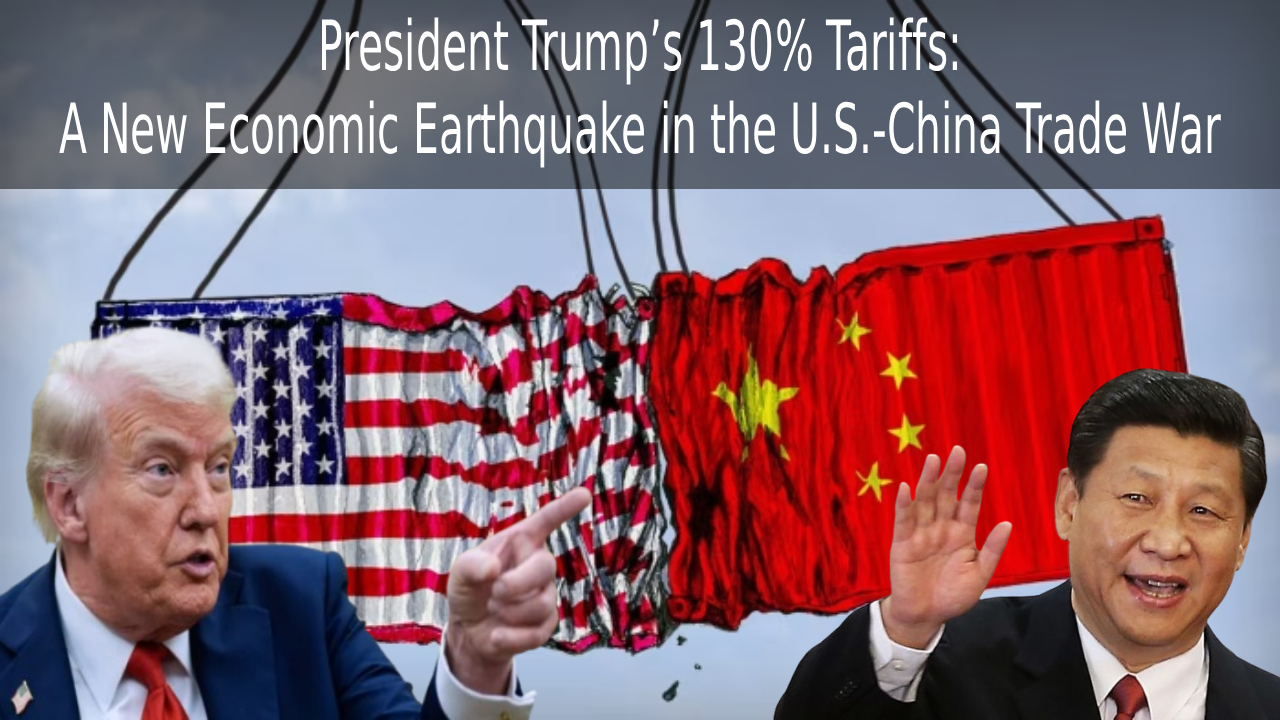
Brivify – In a stunning move that reignited trade tensions, President Donald Trump announced a new 130% tariffs package on Chinese goods a staggering increase atop the existing 30% already in place. This sudden escalation, expected to begin on or before November 1, marks a dramatic reversal after months of relative calm between Washington and Beijing. In his post on Truth Social, Trump declared, “The United States will impose a Tariff of 100% on China, over and above any Tariff they are currently paying.” He further added plans to implement export controls on critical software, intensifying an already volatile economic relationship.
“Read also: EU’s Bold Move: Six AI “Factories” to Power European Innovation“
The Market Fallout: Fear Returns to Wall Street
The financial reaction was immediate and brutal. The Dow Jones Industrial Average plunged 878 points (1.9%), while the S&P 500 fell 2.7%, and the Nasdaq tumbled 3.5% in a single day. Investors had flashbacks to the chaos of earlier this year when tariffs briefly spiked to 145%, freezing supply chains and rattling global commerce. Despite Trump’s history of unpredictable policymaking, traders know better than to ignore his threats. Markets thrive on stability, and Trump’s words alone were enough to send shockwaves across financial sectors worldwide.
A Clash Between the Two Largest Economies
The United States and China remain the world’s two largest economies, and despite their rivalry, their interdependence runs deep. America continues to import hundreds of billions of dollars in goods from China, including electronics, clothing, and furniture essential products that fuel U.S. consumer spending. Likewise, China depends heavily on the American market for agricultural exports and technology components. Both nations, for all their political hostility, are bound by economic necessity. Any disruption, therefore, reverberates through global markets almost instantly.
Why This Time Feels Different
Unlike previous tariff threats, this escalation comes after a period of relative cooperation. Earlier in the year, both sides agreed to lower tariffs China dropped its duties from 125% to 10%, while the United States cut its rates from 145% to 30%. The result was a brief rally in both nations’ stock markets, signaling optimism for a new trade truce. But that fragile peace has now shattered. Trump’s abrupt shift suggests a calculated move driven by political posturing and growing frustration over Beijing’s export restrictions on rare earth elements, materials critical to producing electronics, batteries, and military technologies.
The Rare Earth Catalyst Behind the Crisis
At the heart of this trade flare-up lies a resource most Americans rarely hear about rare earth elements. These materials are vital for making everything from smartphones to electric vehicles. Recently, Beijing tightened export controls on these minerals, citing national security concerns. Trump’s 130% tariffs appear to be a direct retaliation to those restrictions. In essence, both sides are leveraging what the other needs most and in doing so, risking a full-scale economic confrontation. It’s a dangerous game of economic brinkmanship where both nations stand to lose.
Political Theater or Strategic Power Play?
Trump’s history with tariffs often blurs the line between negotiation and intimidation. He uses trade policies not only as economic tools but as political weapons to rally domestic support. By announcing 130% tariffs, he positions himself as a defender of American manufacturing, even as economists warn of rising consumer prices. In truth, many of Trump’s previous tariff threats have been partially reversed or softened. Yet, each new round of uncertainty costs businesses millions and fuels inflationary pressure, particularly on everyday goods imported from China.
The Human Cost of the 130% Tariffs
Beyond the headlines, these tariffs hit ordinary Americans hardest. Higher import taxes translate directly into price hikes on electronics, apparel, and household items. While Trump has pressured tech CEOs to move production to the United States, most still rely on China’s vast manufacturing ecosystem. The transition is costly and slow. Even when companies invest in domestic production as seen with Intel, Apple, and Tesla’s U.S. expansions they continue to rely on Chinese supply chains. Thus, despite political rhetoric, consumers ultimately bear the burden of the 130% tariffs.
China’s Calculated Retaliation
Beijing has already signaled that it won’t sit quietly. China recently imposed mirror restrictions on U.S. shipping operations, targeting American-owned vessels entering Chinese ports. These measures mirror Trump’s earlier attempt to penalize Chinese-operated ships. Moreover, China could counter by tightening its grip on rare earth exports, directly impacting industries like semiconductors and renewable energy. If that happens, the ripple effect will stretch far beyond the U.S., potentially triggering shortages in global tech production a scenario the world can ill afford.
“Read also: CDC Faces Deep Staff Cuts Amid Growing Public Health Concern“
The Supreme Court Wildcard
A looming legal challenge could complicate Trump’s tariff plans. Next month, the U.S. Supreme Court will hear a landmark case that questions the president’s authority to impose trade tariffs without congressional approval. If the Court rules against him, Trump’s unilateral power to adjust tariffs “at will” could face serious limitations. For now, however, Trump remains undeterred using his executive leverage to pressure Beijing while boosting his image as a hardline negotiator. Xi Jinping, by contrast, faces no such legal constraints, giving China an advantage in long-term strategy.
Economic and Political Implications Moving Forward
This trade escalation goes beyond economics; it’s deeply political. Trump’s announcement comes at a time when the U.S. economy is struggling with sticky inflation and slowing growth. By reigniting trade tensions, he risks undermining market confidence just as consumer sentiment begins to stabilize. On the global stage, the move further isolates Washington from its allies, who have urged diplomacy over confrontation. Still, Trump’s strategy may resonate with voters who view tariffs as a necessary defense against Chinese dominance a message likely aimed at bolstering his re-election campaign.
The 130% Tariffs Signal a Return to Uncertainty
The announcement of 130% tariffs on Chinese goods represents far more than another round in the U.S.-China trade war. It symbolizes a return to the volatile unpredictability of past years one where economic strategy intertwines with political theater. Whether Trump intends to follow through or merely test Beijing’s resolve, the impact is already being felt in global markets and American households alike. For now, the world watches as two economic superpowers edge closer to another costly showdown one that could reshape global trade for years to come.