Peru President Dina Boluarte Removed from Office Amid Corruption Scandals and Political Chaos
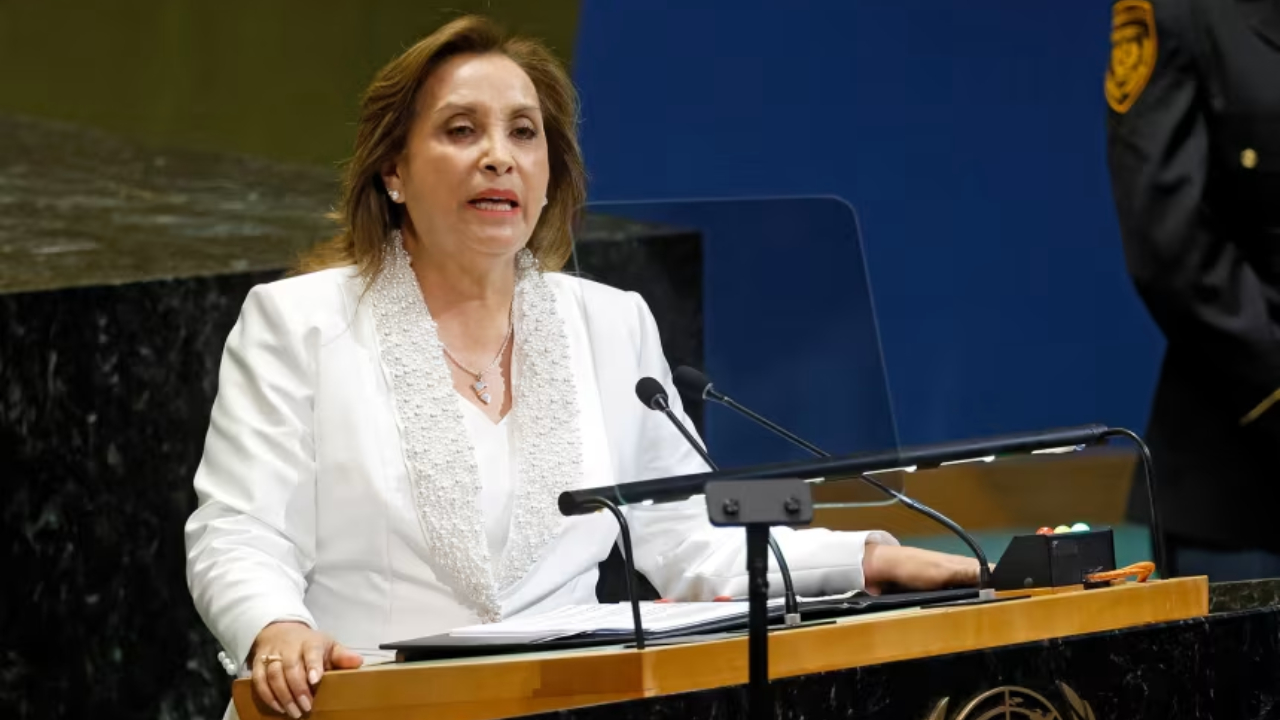
Brivify – In a shocking late-night vote, Peru President Dina Boluarte was removed from office after Congress declared her “permanently morally incapacitated.” The motion passed with cross-party support, signaling rare unity among Peru’s fractured political factions. Her removal followed months of investigations into bribery, abuse of power, and mishandling of deadly protests.
Boluarte’s presidency, once seen as a chance for stability after Pedro Castillo’s chaotic fall, ended in turmoil. She now joins a long list of Peruvian leaders brought down by corruption scandals. Since 2000, seven presidents have faced trial or criminal charges, while one took his own life when police came to arrest him. This continuous cycle of scandal highlights a deeper democratic crisis in Peru’s political system.
Boluarte refused to attend the congressional session that sealed her fate, calling the proceedings “a political ambush.” Yet, her absence only reinforced the public perception that her administration had lost credibility.
“Read also: Trump’s Tariffs Hit Orvis: Iconic Outdoor Brand to Close Stores and Refocus on Its Roots“
The Rise and Fall of Dina Boluarte
When Peru President Dina Boluarte became Peru’s first female president in 2022, she was hailed as a symbol of progress and reform. She took power after Pedro Castillo’s failed attempt to dissolve Congress and declare emergency rule. Her early promises focused on restoring stability, rebuilding institutions, and bridging the gap between Lima’s elite and rural voters.
However, her leadership quickly unraveled. Allegations of corruption, mismanagement, and brutality eroded trust. Her government faced international criticism after security forces killed over 60 protesters demanding early elections. Instead of uniting Peru, Boluarte’s presidency deepened divisions and reignited anger toward political elites.
Her rapid fall from grace reflects a recurring pattern in Peruvian politics leaders rising on promises of change only to succumb to scandal and power struggles.
Scandals That Shattered Her Presidency
The allegations against Boluarte are as varied as they are serious. Foremost among them is her alleged role in the deadly suppression of protests following Castillo’s ouster in 2022, which left more than 60 people dead. Human rights groups have accused her administration of using excessive force and failing to ensure accountability for the victims.
Equally damaging are the corruption accusations. Prosecutors claim she accepted luxury gifts including Rolex watches and expensive jewelry in exchange for political favors. There are also reports that she used a presidential vehicle to transport a fugitive politician, raising further questions about her judgment and integrity.
But perhaps the most bizarre allegation is that Boluarte abandoned her post for nearly two weeks in 2023 to undergo cosmetic surgery without formally notifying Congress or delegating her powers, as required by the constitution. While she claimed the procedure was medically necessary, the surgeon involved contradicted her, stating that it was purely aesthetic. This revelation became a national scandal, symbolizing her detachment from the struggles of ordinary Peruvians.
Political Allies Turned Foes
One of the most striking aspects of Boluarte’s downfall is how rapidly her political alliances collapsed. For months, conservative parties such as Rafael López Aliaga’s Popular Renewal and Keiko Fujimori’s Popular Force defended her administration. However, as investigations deepened and public outrage intensified, even her staunchest supporters began to distance themselves.
By the time Congress convened for the vote, Boluarte stood politically isolated. Her removal was not the result of a partisan coup but rather a rare moment of unity among Peru’s deeply fragmented political factions. The consensus was clear: the country could no longer afford a leader mired in scandal.
This shift underscores a harsh truth about Peruvian politics loyalty often lasts only as long as power does. In a nation where corruption is endemic and political survival is fleeting, allies can quickly become adversaries when public sentiment turns sour.
A Pattern of Presidential Collapse
Peru’s revolving door of presidents has become a defining feature of its democracy. Since the turn of the millennium, every elected leader has either faced impeachment, legal proceedings, or public disgrace. Even more tragically, one former president, Alan García, took his own life in 2019 as police prepared to arrest him on corruption charges.
This pattern reveals a deep institutional rot one that transcends any single administration. Corruption investigations have exposed networks of bribery, nepotism, and abuse of power that span decades. As a result, public trust in government has plummeted, and Peruvians have grown increasingly cynical about their leaders’ promises of reform.
Boluarte’s removal doesn’t mark a turning point but rather a continuation of this vicious cycle a symptom of a political system that punishes transparency and rewards opportunism.
The New Interim Leader and What Comes Next
Following Boluarte’s ouster, José Jerí Oré, the 38-year-old president of Congress, has stepped in as interim president. Under the constitution, he must now call for new elections. However, whether he can restore stability in a nation weary of political upheaval remains uncertain.
Jerí Oré faces immense challenges: rebuilding trust, stabilizing the economy, and addressing Peru’s worsening security situation. Earlier this year, the government declared a state of emergency in the capital, Lima, and the province of Callao amid rising violent crime including the high-profile murder of a popular musician that shocked the nation.
For many Peruvians, the question is no longer who leads but whether the system itself can be repaired. Without structural reforms particularly in anti-corruption enforcement and judicial independence Peru risks remaining trapped in a cycle of scandal and instability.
“Read also: Three U.S. Scientists Win 2025 Nobel Prize in Physics for Quantum Breakthroughs“
Fatigue and Frustration
The reaction on the streets of Lima has been a mix of resignation and anger. While some celebrate Boluarte’s removal as justice served, others view it as yet another chapter in an unending political drama. “We don’t need another election,” said one protester in a local interview. “We need leaders who actually care about Peru.”
This sentiment captures the exhaustion many Peruvians feel. After decades of unfulfilled promises and recurring corruption, faith in democratic institutions is waning. Civil society groups are calling for constitutional reforms to reduce the concentration of power in the executive branch and improve accountability across all levels of government.
In short, the people of Peru are tired not just of their leaders, but of a system that seems incapable of producing honest governance.
Lessons from a Political Crisis
As an observer of Latin American politics, I see Boluarte’s downfall as both predictable and preventable. Her refusal to engage transparently with investigations, coupled with a dismissive attitude toward critics, sealed her fate long before the congressional vote.
However, the deeper issue lies in Peru’s political culture. Frequent impeachments and leadership crises have created a cycle of short-termism, where presidents focus more on survival than on nation-building. Breaking that cycle requires not just new leaders but new incentives ones that reward integrity, transparency, and long-term policy vision.
If Peru hopes to restore stability, it must strengthen its democratic institutions and rebuild the social contract between government and citizens. Until then, the removal of yet another Peru president will remain less a shock and more an expectation.
A Country at a Crossroads
The fall of Peru President Dina Boluarte is not just a personal scandal it’s a reflection of Peru’s systemic fragility. With her exit, the nation stands at a crossroads between renewal and repetition. The world is watching to see whether Peru can finally break free from its cycle of corruption and chaos or whether history will repeat itself once again.
Ultimately, the fate of Peru doesn’t rest solely on who occupies the presidential palace it rests on whether the country’s leaders, institutions, and people are willing to demand something better. And until that happens, the story of the Peru president will likely remain a cautionary tale of power, ambition, and the cost of betrayal.