Israel Accuses Italy of Sparking Chaos in World Cup Qualifiers
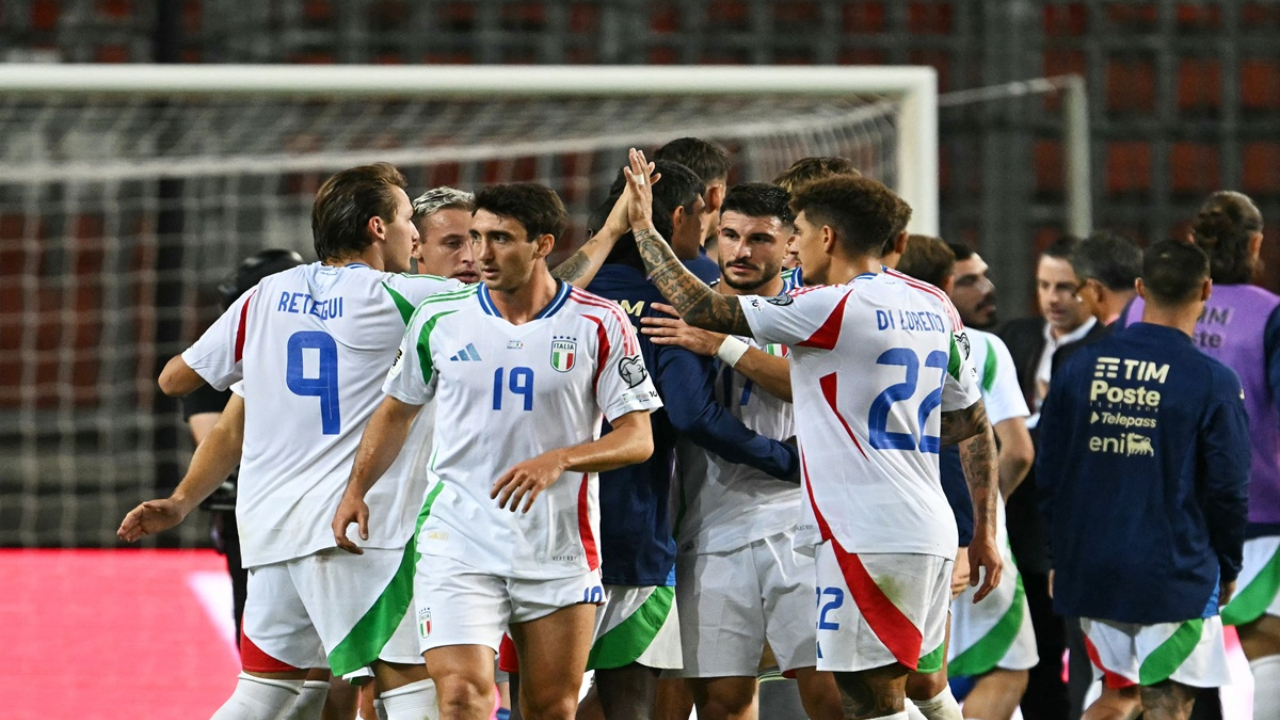
Brivify – The clash between Israel and Italy in the 2026 World Cup Qualifiers will be remembered not only for its nine goals but also for the chaos that followed. Held at the Nagyerdei Stadium in Hungary, the match turned into a footballing drama where emotions ran high. Italy managed to edge out Israel 5-4, yet the scoreline was not the only headline. The tension on the pitch spilled over, leaving a bitter aftertaste long after the referee’s final whistle.
“Also read: Malaysia Triumphs Over Palestine in a Narrow but Historic Friendly Victory“
The Back-and-Forth Battle
From the very beginning, the match carried the feel of unpredictability. Goals came in waves, first through an unfortunate own goal by Dor Peretz, answered quickly by Italy’s Moise Kean. At 2-2, both sides looked unwilling to surrender control. Italy’s surge, courtesy of Matteo Politano and Giacomo Raspadori, pushed them to 4-2, suggesting the game was all but over. Yet, Israel clawed back with remarkable persistence, fueled by another Peretz strike and a Bastoni own goal that reignited belief.
Tonali’s Decisive Strike
Just when Israel seemed destined to carve a miraculous draw, Sandro Tonali shattered their hopes with a last-minute goal. It sealed a dramatic 5-4 win for Italy, but the victory came at a cost. The emotions unleashed on the pitch laid bare the fragile line between competition and conflict. In hindsight, Tonali’s winner wasn’t the end of the drama it was the spark for what came next.
The Post-Match Confrontation
As the final whistle echoed, instead of handshakes, tempers flared. Players from both sides collided in heated exchanges, and even Italy’s coach, the fiery Gennaro Gattuso, was drawn into the confrontation. Cameras captured the chaos, painting a stark picture: this was no ordinary match, but a clash of pride, frustration, and unfiltered emotion.
Eli Dasa’s Accusations
For Israel’s Eli Dasa, the blame lay firmly on the Italians. According to him, Gli Azzurri had mocked and provoked Israel’s players throughout the match World Cup Qualifiers. “They were very, very emotional,” Dasa told Sport5. “They felt they didn’t perform well, and we deserved the win. They tried to provoke us, but we just kept going.” His words reflected a sentiment of injustice, as if the scoreboard told only half the story.
The Italian Mentality Under Pressure
There is a certain irony in the accusations. Italy, a footballing giant, seemed rattled by Israel’s resilience. The provocation, as Dasa described, may have been a tactic to mask vulnerability. After all, a nation accustomed to dominance found itself dragged into a dogfight by an opponent ranked far lower. Was the taunting a sign of arrogance, or simply a cover for their own frustrations?
“Read more: Liverpool Eyes Michael Olise as Mohamed Salah’s Successor“
Gattuso’s Role in the Chaos
No post-match brawl feels complete without a figure like Gattuso in the spotlight. Known for his fiery temperament as a player, his involvement surprised few. Yet his presence in the scuffle raised questions about leadership. Should a coach pour fuel onto already smoldering tensions, or should he act as a stabilizing force? Gattuso’s choice, it seems, leaned toward the former.
Beyond the Scoreline
In the end, the Israel vs. Italy clash will be remembered as more than just a goal fest. It was a reminder that football, while often romanticized, can also expose raw human emotions anger, pride, frustration, and defiance. Israel left the pitch feeling mocked but unbroken, while Italy, despite victory, appeared shaken. Perhaps the real winner that night wasn’t the team on the scoreboard, but the narrative that continues to ripple long after the lights in Nagyerdei Stadium dimmed.