How AI Is Reshaping the Future of Work Worldwide
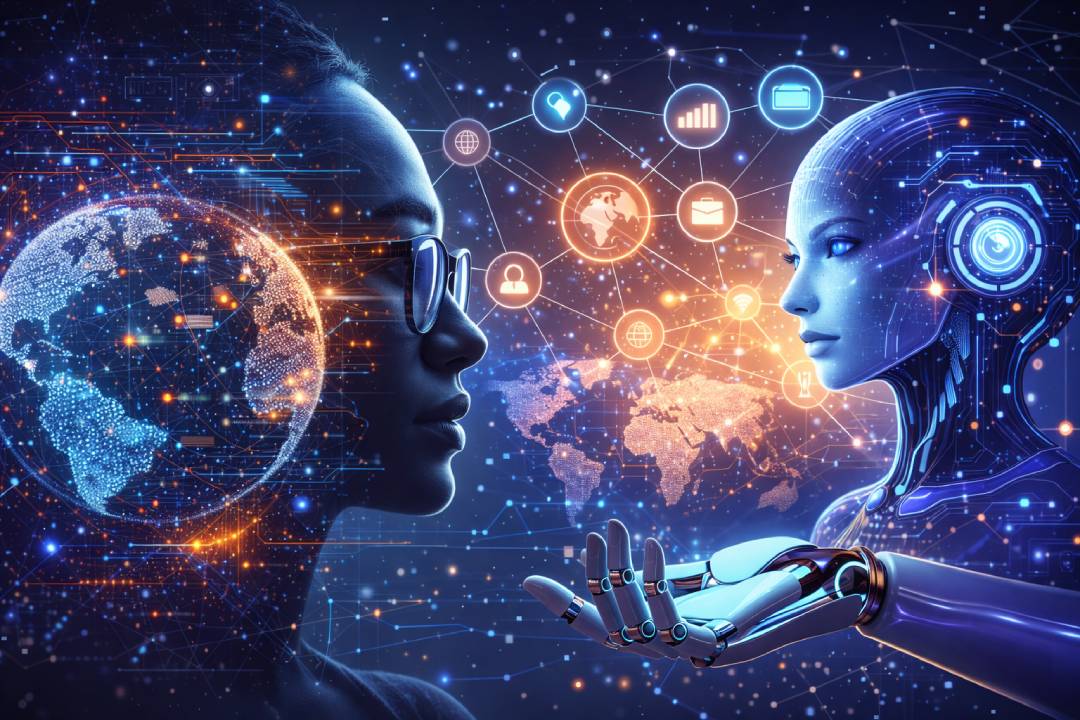
Brivify – AI Is Reshaping the Future of Work Worldwide by redefining how people collaborate, create value, and adapt to rapid change. As artificial intelligence becomes embedded in daily workflows, organizations across the globe are rethinking productivity, skills, and leadership. Rather than replacing human effort entirely, AI increasingly supports decision-making and removes repetitive barriers. As a result, work feels more flexible and data-informed, while professionals are encouraged to focus on creativity, judgment, and continuous learning in an evolving global economy.
“Read Also: The Rise of the Long Engagement: Why Couples“
How AI Is Reshaping the Global Workplace Landscape
AI Future of Work is no longer a distant vision; it is actively reshaping how people work across industries and borders. In recent years, artificial intelligence has moved from experimental labs into everyday workflows, influencing hiring, productivity, and collaboration. As a result, organizations worldwide are redefining roles and expectations. From my perspective, this shift feels less like a sudden disruption and more like a gradual realignment of how value is created. While some fear job loss, many professionals experience AI as a supportive layer that removes friction. Consequently, work becomes more flexible, data-informed, and outcome-driven, reflecting a broader global transformation.
How Automation Is Redefining Traditional Job Roles
Automation powered by AI is changing traditional job roles rather than erasing them entirely. Routine and repetitive tasks are increasingly handled by machines, allowing humans to focus on judgment and creativity. For example, administrative roles now emphasize coordination over data entry. In practice, this transition requires adaptation, yet it also opens new career pathways. From an experience-based view, workers who reskill early tend to benefit the most. Therefore, automation acts as a catalyst for role evolution, not a simple replacement mechanism.
How AI Is Creating New Career Opportunities
AI-driven transformation has sparked the creation of entirely new professions. Roles such as AI trainers, data ethicists, and automation consultants did not exist a decade ago. As organizations adopt intelligent systems, they need people who can interpret, guide, and audit these technologies. In my opinion, this trend highlights how innovation often generates opportunity alongside disruption. Moreover, these roles blend technical understanding with human insight, reinforcing the value of interdisciplinary skills. As a result, the future workforce becomes more diverse in expertise and perspective.
How Remote Work and AI Are Shaping Global Talent
AI has amplified the rise of remote work by enabling seamless digital collaboration. Intelligent scheduling, translation tools, and performance analytics allow teams to work across time zones. Consequently, companies can access global talent without geographic limitations. From a human standpoint, this flexibility empowers workers to balance productivity and personal life more effectively. However, it also demands strong communication and accountability. Therefore, AI-supported remote work reshapes not only where we work, but also how trust and performance are measured.
How AI Is Transforming Skills and Learning Models
The AI-driven workplace places continuous learning at its core. Static skill sets quickly become outdated as technology evolves. As a result, organizations invest more in upskilling and reskilling programs. From my experience, learning is shifting from formal classrooms to adaptive digital platforms. These systems personalize training based on individual progress, making learning more efficient. Consequently, skills development becomes a lifelong process rather than a one-time achievement.
How Ethical Considerations Influence the AI Workplace
Ethics play a growing role in AI adoption at work. Questions about data privacy, bias, and transparency shape public trust. While AI improves efficiency, humans remain responsible for outcomes. From an authority perspective, ethical frameworks protect both employees and organizations. Personally, I believe ethical awareness strengthens long-term sustainability. Therefore, responsible AI use becomes a defining factor in modern workplace leadership.
“Read Also: Rafah Reopens: A Fragile Gateway Between Gaza and Egypt After Nearly Two Years
How Productivity Is Measured in an AI-Driven Era
AI changes how productivity is defined and measured. Instead of focusing solely on hours worked, organizations assess outcomes and impact. Intelligent analytics reveal patterns that help optimize workflows. However, over-reliance on metrics can feel intrusive. In my view, balance is essential to maintain motivation and autonomy. As a result, productivity measurement evolves into a partnership between data insights and human judgment.
How AI Is Reshaping Leadership and Decision-Making
Leadership in the AI era requires adaptability and emotional intelligence. While AI provides insights, leaders must interpret them wisely. Decision-making becomes faster, yet accountability remains human-centered. From experience, effective leaders use AI as a guide rather than a command. Consequently, leadership shifts toward facilitation, trust-building, and strategic thinking, redefining authority in the modern workplace.
How AI Is Defining the Future of Work Worldwide
The worldwide impact of AI reflects a shared transformation rather than a uniform outcome. Cultural, economic, and regulatory factors shape adoption differently. However, the underlying trend remains clear: AI integrates into work as a collaborative force. In my opinion, those who embrace adaptability and learning will thrive. Ultimately, the future of work becomes less about machines replacing humans and more about humans evolving alongside intelligent systems.