Elon Musk Mocks Amazon Web Services Outage While Promoting X’s Independence
Brivify – It was early Monday morning when much of the internet seemed to fall into chaos. Major websites, services, and applications suddenly went dark as Amazon Web Services (AWS) the backbone of countless online platforms experienced a massive outage. From communication tools to e-commerce giants, nearly every corner of the digital world was affected.
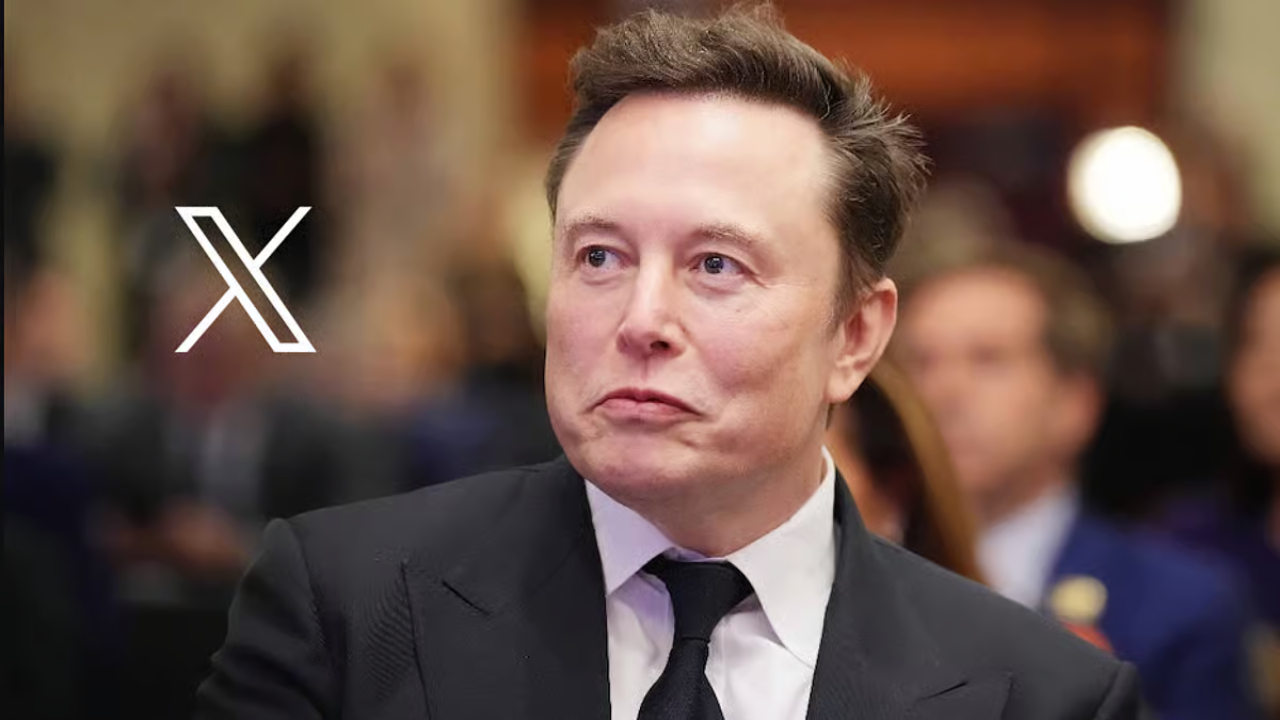
While users around the globe scrambled for updates, one man was quick to respond Elon Musk. The billionaire entrepreneur and owner of X (formerly Twitter) couldn’t resist taking a public jab at Amazon, turning the moment into both a joke and a marketing opportunity. “Not us,” he wrote succinctly on X, responding to a post listing all the companies impacted by the AWS disruption.
It was classic Musk witty, timely, and strategic. His message carried both humor and subtext: X runs independently, and unlike much of the internet, it remained unshaken.
“Read also: Google’s DeepSomatic: A Leap Toward Precision Cancer Detection“
Turning Outage into Opportunity
Musk didn’t stop at one post. As memes mocking Amazon and its founder Jeff Bezos began circulating, he joined in the banter. The rivalry between Musk and Bezos is well-documented, often flaring between SpaceX and Blue Origin, but this time, the battleground was the cloud.
What made the situation even more interesting was Musk’s ability to turn a global inconvenience into a marketing moment. While Amazon engineers worked tirelessly to restore services, Musk used the spotlight to promote X’s new chat feature, contrasting it with platforms that rely heavily on AWS infrastructure. From a business standpoint, it was a clever move demonstrating confidence in his company’s independence while subtly positioning X as more resilient.
Criticizing Amazon Web’s Dependency
The Amazon Web Services outage reminded the world how centralized the internet has become. For years, AWS has quietly powered much of the digital ecosystem from social media and banking systems to government operations. However, this reliance has a dark side: when AWS falters, much of the web follows.
Musk seized on this reality to highlight what he sees as a dangerous overdependence on cloud giants. He pointed out that X has no such “strange AWS dependencies,” a statement that resonated with tech enthusiasts who value decentralization. In my view, this jab wasn’t just about competition it was a subtle critique of how fragile the web’s infrastructure really is.
Taking Aim at Signal and Encryption Standards
Amid the outage, many users also reported issues with Signal, a popular encrypted messaging app that partly relies on AWS. Musk used this as another opportunity to plug X’s new encrypted messaging system. “I don’t trust Signal anymore,” he declared on his own platform, following up with a bold claim:
“The messages are fully encrypted with no advertising hooks or strange ‘AWS dependencies’ such that I can’t read your messages even if someone put a gun to my head.”
He went on to emphasize that X’s system supports file transfers, audio, and video calls positioning it as a complete alternative to mainstream communication platforms. It was a typical Musk move: assertive, slightly provocative, yet grounded in the idea of technological sovereignty.
A Subtle Power Play in the Tech Rivalry
To outsiders, Musk’s posts might have looked like jokes. But to anyone familiar with Silicon Valley dynamics, it was a strategic power play. Musk and Bezos have long represented two opposing tech philosophies: Bezos built Amazon on cloud dominance, while Musk bets on vertical integration controlling everything from software to hardware to satellites.
By boasting about X’s independence, Musk was effectively making a point: he doesn’t want his empire to depend on anyone else’s infrastructure. In an industry where downtime costs millions, that self-reliance could be a competitive edge. Personally, I see this as more than friendly teasing it’s part of Musk’s broader vision of digital autonomy.
“Read also: The Tech Industry’s Turnaround Moment“
Amazon Web’s Fragile Dominance
Despite its reliability and massive scale, Amazon Web Services has faced several high-profile outages in recent years. Each incident reveals just how deeply AWS is woven into modern life. A single disruption can affect airlines, hospitals, and global financial systems. Monday’s outage was no exception social platforms, payment gateways, and even smart home devices experienced failures.
For critics like Musk, this centralization is both impressive and alarming. It’s proof that while AWS is the engine of the internet, it’s also a single point of failure. The irony is that Musk’s companies, from SpaceX’s Starlink to Tesla, thrive on distributed, resilient networks systems designed to keep functioning even when one node fails. His critique of AWS fits perfectly within that philosophy.
A Marketing Lesson in Real-Time
Beyond the technical discussions, what Musk demonstrated was masterful public relations. While other companies went silent during the crisis, Musk made noise and the internet listened. His short, sharp comments turned a global outage into free advertising for X’s infrastructure and new features.
This is what makes Musk such a fascinating figure in modern tech. He doesn’t wait for perfect timing; he creates it. His posts often blur the line between humor, marketing, and provocation but they always serve a purpose. In this case, that purpose was to remind users that X stands apart, resilient and self-reliant.
The Future of Cloud Independence
The AWS outage reignited an important discussion about internet resilience and decentralization. As companies continue to migrate to the cloud, Musk’s remarks highlight the need for balance innovation shouldn’t come at the cost of dependency.
From my perspective, this incident underscores how the next generation of digital infrastructure will likely favor distributed systems and redundancy, something Musk has been advocating for years. Whether through Starlink’s global satellite internet or X’s independent architecture, he seems determined to build a digital ecosystem immune to centralized failures.