When the Sky Betrayed Myanmar, A Night of Fear, Fire, and Unbroken Spirit
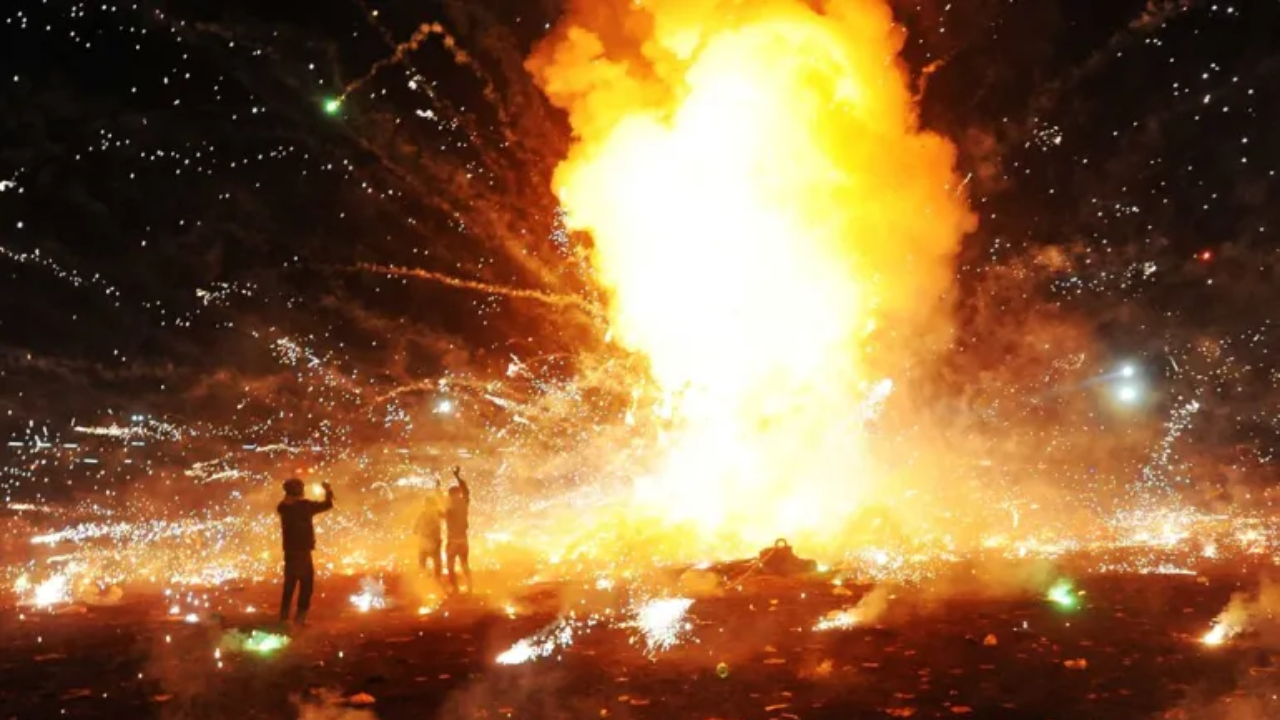
Brivify – The night air in Myanmar Sagaing region once carried the hum of celebration. Lanterns swayed in the evening breeze, laughter filled the fields, and for a brief moment, the people forgot the war that shadowed their days. But that peace was shattered by an unfamiliar sound the sharp whir of fan blades slicing through the sky. It was the prelude to horror. A 30-year-old protester looked up and saw a motorized paraglider circling above. Within moments, the world around him exploded. “I was thrown away,” he recalled, his voice trembling. “I thought my legs were gone. Then I touched them and realized they were still there.”
A Celebration That Became a Massacre
The gathering in Chaung-U township should have been peaceful. Families brought lanterns, children ran through the fields, and for a few hours, the war outside felt distant. But as the paramotor hovered above, fear replaced laughter. The craft swooped low and released explosives into the crowd. People fell, scattered, and ran for cover. At least twenty were killed instantly, their lives extinguished by the same military that once swore to protect them. For those who survived, the joy of the festival turned into the nightmare of survival.
A New Weapon in a Familiar War
Paramotors, once a symbol of adventure, have become a dark innovation in Myanmar’s civil conflict. The junta began modifying them into deadly war machines in late 2024. Small, fast, and nearly silent, they can carry soldiers who drop bombs or fire rifles mid-flight. They move low and fast enough to strike without warning, escaping before anyone can react. Armed Conflict Location & Event Data Project (ACLED) reports show that these machines have been deployed more frequently since the start of 2025, marking a grim evolution in the junta’s air warfare strategy.
The Sky No Longer Offers Safety
The number of airstrikes across Myanmar keeps rising. Between January and May 2025, over 1,100 air assaults hit civilian and resistance areas. That number dwarfs the 640 airstrikes recorded in 2024. Every village, every field, and every patch of sky now carries danger. The junta’s growing dependence on air power shows how fragile its control has become. Unable to dominate the ground, it turns to the heavens for destruction. For the people below, even a breeze that sounds like a drone or a glider sparks panic.
A Civil War That Refuses to Die
Since the military coup of 2021, Myanmar has lived in endless conflict. The elected government was overthrown, and in its place rose a regime ruled by fear. Citizens formed the People’s Defence Forces (PDF) to resist, and dozens of ethnic militias joined the cause. Together, they fight a powerful army that has money, machines, and foreign weapons. The rebels, however, fight with courage and desperation. Their battlefields stretch across mountains and rivers, but their most dangerous enemy is now above them.
A Survivor’s Voice Amid the Ruins
In the aftermath of the Chaung-U attack, survivors spoke through tears. The protester who lived to tell his story had crawled into a ditch, waiting for silence before friends dragged him out. Around him, the field was littered with fragments of what used to be a celebration. “This is mass murder,” he said, anger rising in his voice. “They are killing openly, without shame.” His words captured not just his grief but the collective fury of a people who have endured too much for too long.
The Strategy of Terror and Control
Analysts see a brutal logic in the junta’s actions. “They strike areas with limited resistance equipment,” said Su Mon, a senior analyst at ACLED. Paragliders are perfect for this strategy light, maneuverable, and terrifying to civilians. The military uses them where rebels lack heavy ammunition or anti-air weapons. The message is simple: if you resist, you die. But fear doesn’t always work as intended. In many regions, the bombings have pushed more civilians to support the resistance. The junta’s tactics are feeding the very rebellion it wants to crush.
Resistance That Refuses to Break
Despite the relentless violence, small victories remind people that hope still breathes. The Burma Revolution Rangers claimed to have shot down one of the junta’s paramotors earlier this year. It was a rare success, but symbolically powerful. It showed that the sky though hostile could still be contested. “We cannot match their weapons,” one rebel said, “but we can match their courage.” Across Myanmar, that courage keeps the rebellion alive, carried by farmers, teachers, and students who refuse to surrender.
A World That Watches in Silence
Outside Myanmar, the war barely makes headlines. Human rights groups like Amnesty International and the United Nations have condemned the violence, yet the world remains largely still. Economic sanctions sting, but not enough to stop the bombs. For the people of Sagaing, silence from beyond their borders feels like betrayal. Each explosion becomes not just an act of war but a cry for attention a plea to the world to remember they exist.
When Hope Learns to Fly Again
The survivor from Chaung-U still walks with a limp, but his resolve remains strong. He no longer sees the sky as a symbol of freedom, yet he refuses to let fear rule him. “They took our peace,” he said quietly, “but not our will.” That will fierce and unbroken has become Myanmar’s greatest weapon. Amid the ashes of war, people still gather, still sing, and still dream of a day when no sound from above will make them run.
In the shadow of paramotors and bombs, Myanmar’s story is not just one of tragedy. It is also one of endurance. For even when the sky turns hostile, the human spirit continues to rise, reaching for the light beyond the smoke.