Greek Students Take to the Streets as Education Crisis Deepens
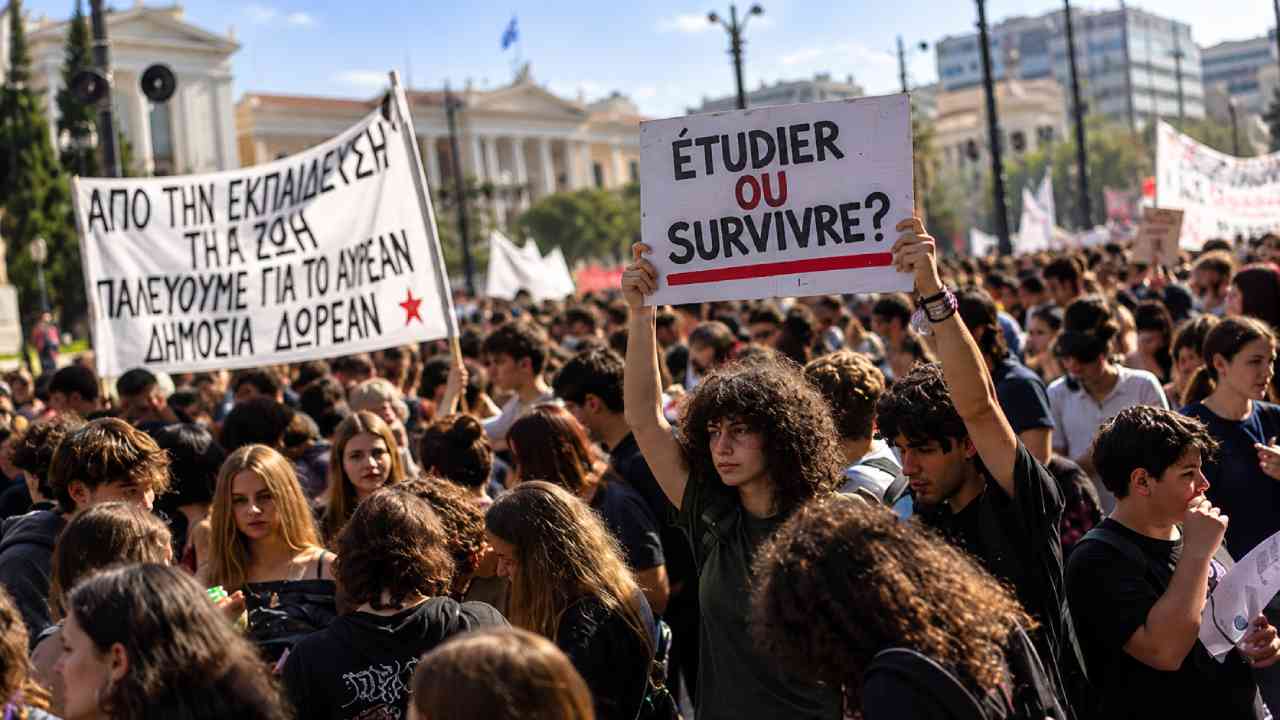
Brivify – Greek Students have taken their concerns beyond classrooms and onto the streets. Thousands of students, university groups, and teachers joined demonstrations across Greece. They called for stronger public education funding, better facilities, and less crowded classrooms. Athens became the center of one of the largest gatherings. However, similar rallies also appeared in other cities. The protests reflect more than frustration with schools. They also reveal growing pressure on young people who face expensive housing and rising daily costs. For many students, education and affordability have become closely connected. A university experience may depend on access to classrooms, but it also depends on whether students can afford rent, food, transport, and electricity. As a result, the demonstrations have developed into a broader conversation about the future available to Greece’s younger generation.
Read Also: Ferrari Luce Design Divides Opinion as Frank Stephenson Weighs In
Greek Students Bring Education Concerns Into Public View
Around 10,000 demonstrators gathered in Athens and surrounding areas, according to police estimates. School pupils and university students joined teachers in the largely peaceful action. Their demands focused on practical problems that affect everyday education. They want more public funding, improved facilities, and better learning conditions. Crowded classrooms have become one of the concerns raised during the movement. Meanwhile, students argue that stronger investment is necessary if public education is expected to remain accessible. The scale of the demonstration also made the issue difficult to ignore. A classroom problem can seem local when viewed from a single school. Yet thousands of people raising similar concerns creates a different picture. Therefore, the demonstrations have placed education firmly within Greece’s wider public debate.
Athens Becomes the Heart of the Demonstrations
Athens offered some of the most striking scenes from the movement. Before the main march, students set up tents in Syntagma Square near the Greek parliament. Some stayed overnight before joining the demonstration the following day. The setting carried symbolic weight. Syntagma Square has long served as an important gathering point for political and social movements in Greece. This time, education stood at the center of attention. As crowds moved through central Athens, protesters called for accessible public education and greater state support. Still, the atmosphere remained largely peaceful. That distinction matters because public demonstrations elsewhere in Europe have sometimes developed into serious clashes. In Athens, the visible presence of young people, teachers, banners, and temporary tents created a clear message without requiring widespread disorder.
Teachers Add Their Voices to the Student Movement
Students were not alone in expressing frustration. Primary school teachers also joined strike action, which disrupted activities at some public schools. Their involvement added another layer to the debate. Teachers experience education policy from inside classrooms, so concerns about staffing and facilities can directly affect their daily work. Moreover, some doctors also took part in industrial action linked to wages and staffing shortages. That wider participation suggests dissatisfaction is not limited to one sector. Public services depend on workers, infrastructure, and long-term investment. When several groups raise similar concerns at the same time, the discussion can quickly move beyond individual workplaces. In this case, the demonstrations have opened questions about how Greece balances public spending with the everyday needs of teachers, students, health workers, and families.
Rising Living Costs Make Education Harder to Afford
For many Greek Students, the challenge does not end when they leave the classroom. Housing has become another major concern, particularly in urban areas. Students who move away from home must often manage rent alongside food, electricity, transport, and other expenses. Those costs can place additional pressure on families that help support them. Georgia Foukidou, a 21-year-old student who joined the Athens demonstration, described how expensive rents make everyday life difficult. Her comments capture an important part of the protest. Public education may be available, yet attending university still requires students to live somewhere and cover basic expenses. Therefore, affordability becomes part of the education debate. When housing costs rise faster than household budgets, access to education can become more complicated even before tuition or academic expenses enter the discussion.
Government Investment Targets Student Housing and Facilities
Education Minister Sofia Zacharaki has acknowledged the concerns raised by students, including pressure from housing costs. The government says projects worth more than EUR 733 million are underway. The investment includes new student accommodation and improvements to education facilities. These projects could address some of the structural problems highlighted by protesters. New student housing, for example, may reduce pressure on young people struggling with private rental costs. Better facilities could also improve everyday learning conditions. However, infrastructure projects take time. Students facing high expenses today may not immediately feel the benefits of buildings scheduled for the future. Therefore, the challenge for policymakers is not only to announce investment. They must also show how those plans translate into noticeable improvements. The gap between long-term policy and immediate financial pressure remains one of the central tensions behind the demonstrations.
Greece Still Carries Memories of Its Debt Crisis
The current debate also sits against the background of Greece’s long debt crisis. Between 2009 and 2018, the country experienced years of austerity, wage pressure, and reductions in public spending. Greece received three international bailout packages worth around EUR 290 billion during that period. Those programs helped stabilize the country’s finances, but the social consequences were significant. Education budgets and wages came under pressure as the government attempted to meet strict financial requirements. Greece has since moved beyond the worst period of the crisis. Nevertheless, its effects remain part of the country’s political memory. For many families, economic recovery is measured not only through national statistics. It is measured through wages, rent, household bills, and access to public services. Consequently, calls for more education funding can carry deeper meaning in a country where public budgets were once cut sharply.
Wages and Housing Reveal a Difficult Economic Balance
Wages have increased since the debt crisis, yet purchasing power remains a concern for many households. Average monthly pay is around EUR 1,500, while housing costs in major urban areas can consume a significant share of income. Inflation and higher energy expenses have added further pressure. This combination can be especially difficult for younger people who are still studying or entering the workforce. They may earn less while facing the same expensive housing market as everyone else. As a result, the education demonstrations also reflect a wider question about economic mobility. Students invest years in education because they expect it to create better opportunities. However, that expectation becomes harder to maintain when independent living feels increasingly difficult. From this perspective, the protests are partly about schools and universities, but they are also about what happens after graduation.
Protests Elsewhere in Europe Add Wider Context
The Greek demonstrations have emerged during a period of public unrest in parts of Europe. Protesters in Athens expressed solidarity with movements elsewhere, including demonstrations connected to living costs and broader political frustrations. However, each country has its own economic and political circumstances. Greece’s movement remains strongly connected to education, housing, wages, and public services. The country’s recent protests have also remained largely peaceful. Even so, the similarities across borders are difficult to overlook. Young people in several European countries are questioning whether wages and public services can keep pace with modern living costs. Housing is particularly important because it affects students, young workers, and families at the same time. Therefore, Greece’s education protests can be viewed both as a national issue and as part of a broader European debate about affordability.
Political Pressure Is Growing Ahead of the 2027 Election
The demonstrations create another challenge for Prime Minister Kyriakos Mitsotakis and his center-right government. Greece is expected to hold a general election in 2027, which means living costs and public services may become increasingly important political issues. Education can be particularly sensitive because it affects several generations at once. Students experience the system directly, teachers work within it, and parents often carry much of the financial burden. Meanwhile, the government has announced subsidies and other support measures designed to help households and businesses deal with energy costs. The total support is expected to reach around EUR 1 billion. Yet voters will ultimately judge those policies through their own circumstances. If household budgets remain under pressure, large national spending figures may feel distant. Therefore, the government’s response to education and affordability could influence the political conversation well beyond the current demonstrations.
Read Also: LeBron James Leads 76ers Past Knicks in Season Opener
Education Funding Is About More Than School Buildings
It is easy to discuss education funding through numbers alone. Budgets, construction projects, and staffing figures are measurable. However, the real effect appears in everyday experiences. A crowded classroom can change how much attention a student receives. Limited staffing can increase pressure on teachers. Expensive housing can determine whether a university student can continue living near campus. Therefore, investment in education works best when policymakers consider the entire environment around learning. Buildings matter, but so do teachers, transportation, housing, and household finances. This broader view helps explain why Greek Students are connecting education with the cost of living. Their concerns do not exist in separate boxes. Instead, one problem often makes another more difficult. Improving education may therefore require solutions that extend beyond school gates.
Young People Are Asking What Their Future Will Look Like
Behind the demonstrations lies a simple but powerful concern about the future. Students spend years preparing for adult life, yet many are entering an economy where housing is expensive and household budgets remain stretched. This does not mean opportunity has disappeared in Greece. Rather, it shows why younger generations are paying close attention to the systems that shape their future. Education is one of those systems. When students believe it needs greater investment, taking their message into public spaces becomes a way to demand attention. Teachers joining them gives that message additional weight. At the same time, government investment shows that officials recognize at least some of the underlying challenges. The debate now centers on whether planned measures will be enough and how quickly improvements will become visible.
Greek Students Turn Education Into a Bigger Conversation
The demonstrations may have started with demands for better education, but their meaning has expanded. Greek Students are raising questions about classrooms, public funding, housing, wages, and the affordability of everyday life. Those issues ultimately meet at the same point: whether young people can build a stable future. Greece has already survived a historic debt crisis and years of difficult economic adjustment. Today, the country faces a different challenge. Economic progress must become visible in the lives of ordinary people, especially younger generations. More funding and new student housing could help, but public confidence will depend on real results. For now, the crowds in Athens have ensured that education cannot easily disappear from the national conversation. Their message is not simply about spending more money. It is about making education and opportunity feel attainable again.


Post Comment