Xi Jinping Vision, China’s Five-Year Blueprint and the Power of Strategic Planning
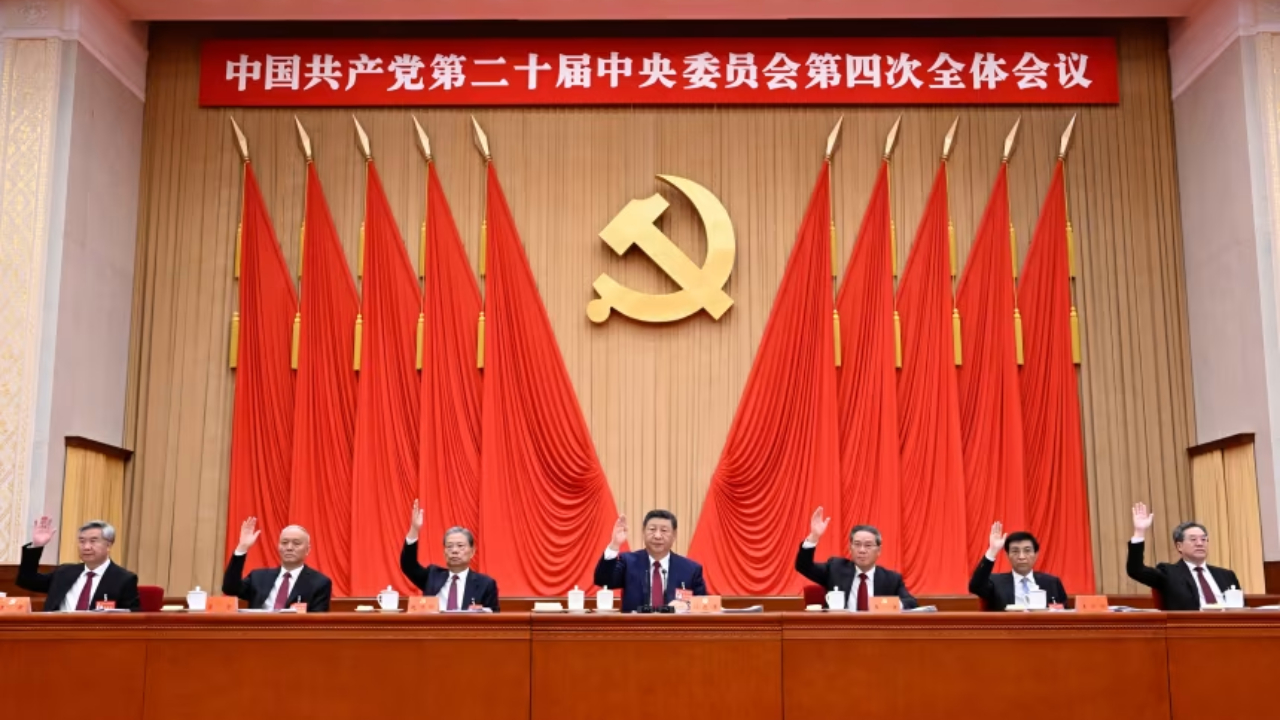
Brivify – At the center of China’s latest five-year economic plan, Xi Jinping once again demonstrates his mastery of long-term governance. The recent closed-door conclave in Beijing focused on creating a sweeping national strategy that will define China’s path through 2030 touching on everything from advanced technology and agriculture reform to national defense and global competitiveness.
For Xi, this plan is not just an economic roadmap but a statement of confidence in China’s system. As the United States wrestles with political gridlock and internal divisions, Beijing positions its centralized decision-making as a strength, highlighting China’s capacity for consistency and execution. This is more than planning; it is a calculated narrative one that reinforces the legitimacy of Xi’s leadership at home and abroad.
“Read also: Trump Raises Tariffs on Canada by 10% After Anti Tariff Ad Sparks Tension“
The Strategic Importance of the Five-Year Plan
The five-year plan has always been the foundation of China’s policy-making. Under Xi Jinping, however, it has evolved into a strategic instrument of national transformation. This blueprint seeks to reduce China’s dependency on foreign technology while accelerating its self-reliance in innovation, manufacturing, and defense.
In Xi’s view, long-term planning ensures resilience in the face of global uncertainty. “Scientific formulation and continuous implementation of the five-year plan,” one senior Party official remarked, “is a key political advantage of socialism with Chinese characteristics.” In essence, the plan symbolizes China’s promise of stability a quality Xi believes distinguishes his leadership from the unpredictability of Western democracies.
Showcasing Systemic Strength Amid Global Rivalry
Timing plays a critical role in Xi’s unveiling of this strategy. The conclave coincided with a U.S. government shutdown a symbolic contrast Beijing eagerly emphasized. State media drew parallels between China’s “strategic consistency” and Washington’s “political paralysis,” reinforcing Xi’s argument that China’s model of governance is superior in turbulent times.
In the pages of People’s Daily, commentary praised how China “views the whole country as one chessboard,” advancing toward its goals while Western nations “remain trapped in short-term politics.” This narrative supports Xi’s broader message: in a world of uncertainty, China’s stability offers not only an advantage but a model for others to follow.
Technology and Self-Reliance: Xi’s Core Vision
Central to Xi Jinping’s strategy is technological independence. The five-year plan outlines an ambitious agenda to lead in emerging industries such as quantum computing, biotechnology, hydrogen energy, nuclear fusion, and sixth-generation (6G) mobile networks. These initiatives signal China’s intent to outpace global competitors while insulating itself from Western sanctions and export controls.
Zheng Shanjie, head of the National Development and Reform Commission, emphasized that these efforts would “accelerate high-level scientific and technological self-reliance.” For Xi, achieving this goal isn’t merely about innovation it’s about sovereignty. He views technology as the new frontier of national power, one where control equals security.
A Focus on Manufacturing and Industrial Power
Despite calls from some economists to transition toward a service-based economy, Xi Jinping remains committed to strengthening China’s industrial core. The plan pledges to reinforce the country’s manufacturing prowess, upgrade product quality, and expand aerospace, transportation, and cyberspace capabilities.
Xi’s approach echoes a familiar philosophy: industrial might forms the backbone of national greatness. Under his leadership, manufacturing is not a relic of the past but a strategic tool for global dominance. In a rapidly shifting economic landscape, Xi seeks to position China as the world’s indispensable production hub technologically advanced, self-sufficient, and globally competitive.
National Security and Economic Resilience
Beyond economics, the five-year blueprint intertwines development with national defense. Xi’s administration underscores the importance of “accelerating the building of advanced combat capabilities,” blending economic modernization with military readiness. This reflects his belief that prosperity and security are inseparable pillars of national revival.
Moreover, the plan addresses domestic challenges such as income inequality, weak consumption, and overcapacity. Officials vow to “vigorously boost consumption,” improve social security, and open markets to foreign participation. These steps aim to ensure internal stability a prerequisite for sustaining China’s external ambitions.
“Read also: NFL Week 8: Jets Finally Win, Josh Allen Breaks Record, and Rodgers Falls to Former Team“
A Political Advantage Rooted in Control
For Xi Jinping, centralized planning is not just about efficiency; it is about control. He sees the five-year plan as both a governance tool and a political symbol proof that China’s one-party system can deliver long-term progress while democracies struggle with division and reversal.
In contrast to Western nations where policies shift with every election cycle, Xi’s China operates under a single, enduring vision. State media calls this “long-termism” a term that encapsulates the continuity and discipline that Xi believes define his governance. This ideology strengthens his image as a leader who looks beyond immediate results to shape the future of civilization itself.
Learning from the Past: Success and Caution
China’s history of centralized planning is filled with both triumphs and tragedies. The “Great Leap Forward,” the country’s second five-year plan in 1958, sought rapid industrialization but ended in famine, costing tens of millions of lives. Yet, modern plans have largely steered China toward success lifting hundreds of millions from poverty, transforming it into a technological powerhouse, and leading the global green transition.
Xi’s challenge lies in balancing ambition with pragmatism. Overinvestment and state subsidies have sometimes produced oversaturation, as seen in the electric vehicle sector. However, Xi remains undeterred, viewing such excesses as necessary steps toward innovation dominance.
Xi’s Vision of China’s Role in the World
Under Xi Jinping, China’s ambitions transcend borders. The five-year plan reflects his desire to position China not just as a global participant but as a global leader. Beijing now presents itself as a source of “certainty” in an unpredictable world, contrasting sharply with Western instability.
Xi’s message is clear: through disciplined planning, unity of purpose, and unwavering execution, China can achieve what others cannot. It’s not merely a matter of economics it’s a demonstration of ideological confidence. In his own words, this strategic planning represents “a vital political advantage” in the quest for China’s great rejuvenation.