Russia Launches Largest Airstrike on Ukraine, Kyiv Blazes
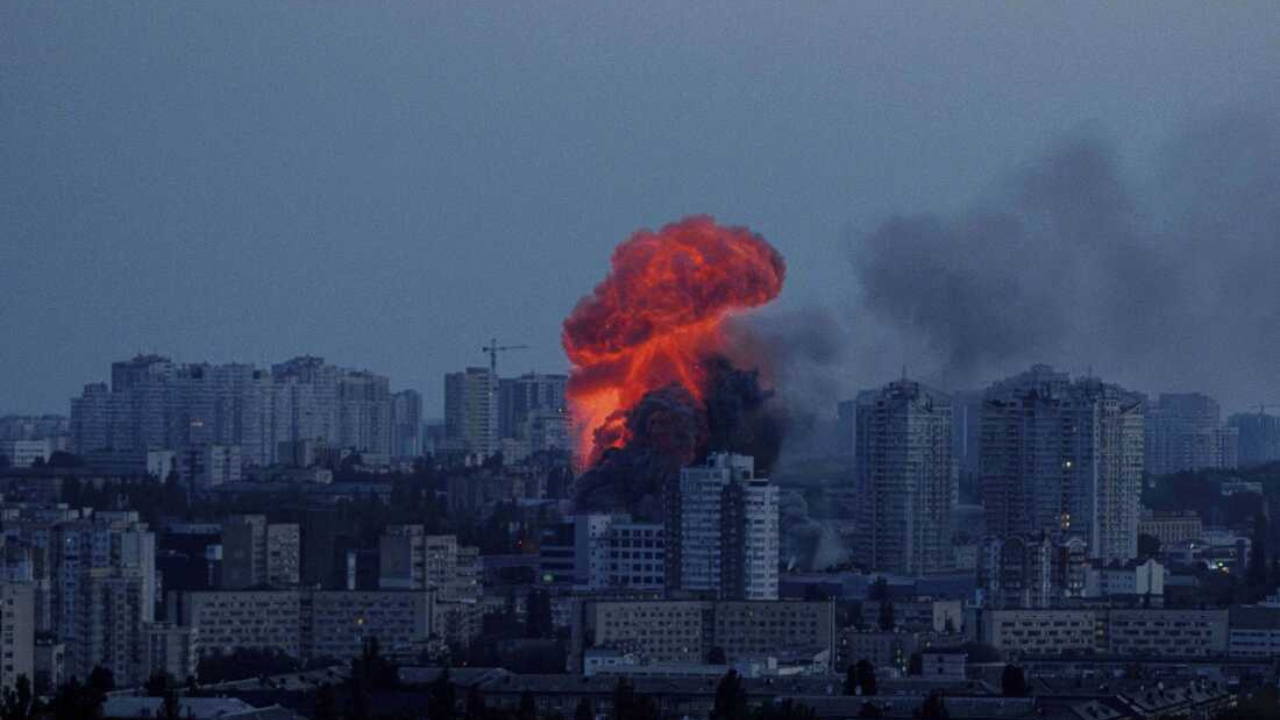
Brivify – On Sunday morning, Russia Launches Largest Airstrike of unprecedented scale on Ukraine, marking the most intense air assault since the war began more than three years ago. The attack killed at least two civilians and set ablaze parts of Kyiv, including the roof of the Ukrainian cabinet of ministers’ building. Thick black smoke rose above the capital, painting a chilling picture of devastation. Isn’t it alarming how the war continues to escalate when peace talks seem desperately overdue?
“Also read: China Makes AI Education Mandatory in Schools“
Kyiv Government Quarter Under Fire
For the first time in this prolonged conflict, the heart of Kyiv’s government was directly targeted. Eyewitnesses reported helicopters dropping what appeared to be water buckets to contain the inferno, while emergency crews scrambled to control the blaze. Police quickly sealed off the area, underscoring the gravity of this brazen assault. Doesn’t striking such a symbolic site suggest Russia is raising the stakes?
The Human Cost of Relentless Attacks
Tragically, among the victims were a mother and her two-month-old baby, killed when drones struck a nine-story residential building. More than a dozen others sustained injuries in Kyiv alone. Prime Minister Yulia Svyrydenko expressed grief, acknowledging that while buildings could be rebuilt, “lives lost cannot be restored.” Isn’t this a stark reminder that civilians remain the greatest victims of war?
Record Numbers of Drones and Missiles Deployed
According to Ukraine’s air force, Russia Launches Largest Airstrike using at least 805 drones and 13 missiles overnight. This figure set a grim record for the largest aerial offensive of the war. The sheer volume of attacks overwhelmed defenses, showing Russia’s determination to prolong the conflict. How can diplomacy succeed when violence continues to escalate at this magnitude?
International Reactions and Diplomatic Tensions
The assault followed recent pledges from France and the UK to send “peacekeeping” forces into Ukraine to enforce a potential peace agreement. Unsurprisingly, Moscow rejected such proposals outright. Instead of de-escalation, Russia responded with intensified military aggression. Doesn’t this suggest that the gap between diplomatic promises and battlefield realities is widening?
Zelensky Condemns ‘Deliberate Crimes’
President Volodymyr Zelensky condemned the strikes as deliberate crimes aimed at prolonging the war. In a Facebook post, he emphasized that genuine diplomacy could have begun long ago but was instead replaced by terror and bloodshed. His words resonate with frustration and urgency—how long can a nation withstand such relentless pressure before international intervention becomes inevitable?
“Read more: Visual Drone Assistant for Videographers, Redefining Creativity in the Sky“
Impact on Ukraine’s Morale and Resilience
Despite the destruction, Ukrainian officials pledged resilience. Emergency teams worked tirelessly to extinguish fires, treat the wounded, and restore essential services. Citizens, though shaken, continue to show remarkable endurance. The repeated message from Kyiv’s leadership is clear: while Russia destroys, Ukraine rebuilds. Could this resilience ultimately become the strongest weapon Ukraine holds?
The Broader Implications for Europe
This latest escalation has sent shockwaves beyond Ukraine’s borders. European leaders fear that unchecked aggression could destabilize the continent further. By targeting central Kyiv, Russia has not only struck Ukraine but also sent a message to its allies. Will Europe respond with unity, or will divisions over intervention deepen?
A War That Refuses to End
Ultimately, Russia Launches Largest Airstrike is not merely another episode in a long war—it is a statement of intent. By escalating violence, Moscow signals its unwillingness to compromise, while Ukraine continues to pay the heaviest price. As Kyiv burns and the world watches, the question remains: how much longer can diplomacy be delayed before the cost becomes unbearable for everyone?