Paris Jewel Theft, Arrests Made in Connection with the Daring Louvre Heist
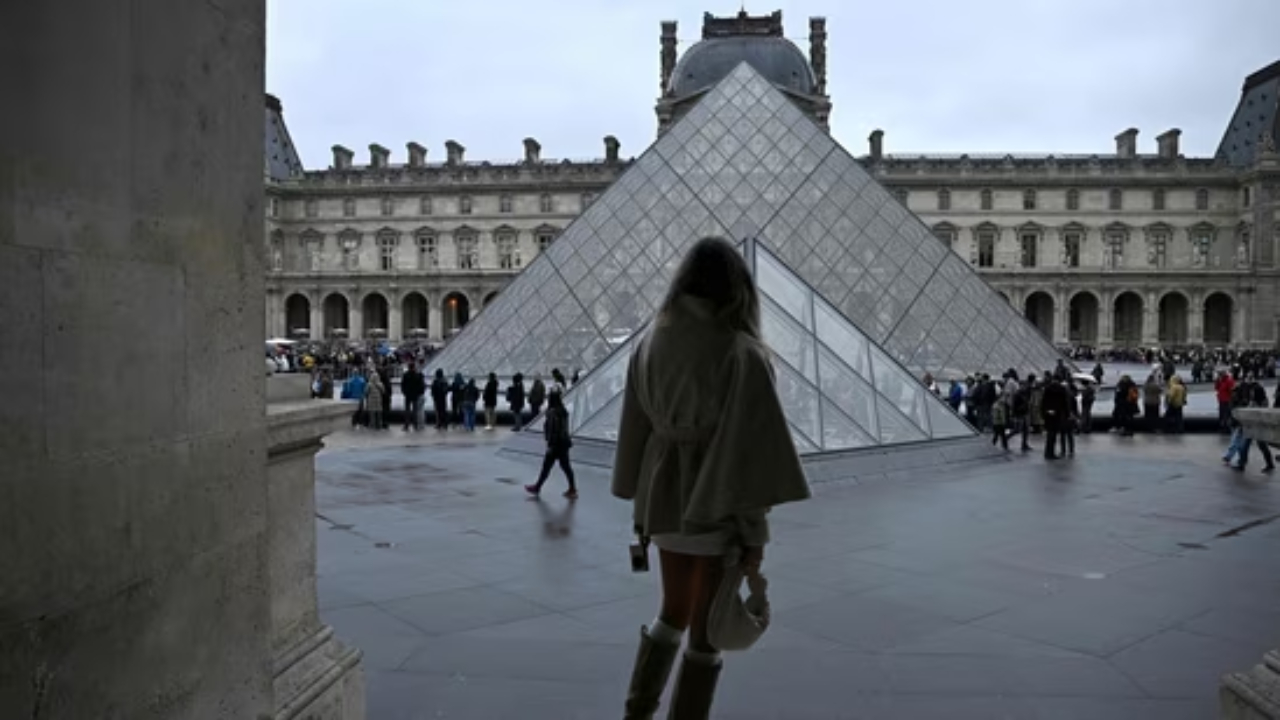
Brivify – Paris, known for its art, elegance, and history, became the scene of a shocking jewel theft that stunned the world. Thieves pulled off an audacious robbery at the Louvre Museum, stealing priceless royal jewels in broad daylight. Within days, French police tracked down and arrested two suspects one caught at Charles de Gaulle Airport just before escaping the country.
This wasn’t just another robbery. It was a symbolic attack on one of France’s greatest cultural treasures, raising uncomfortable questions about how such a high-profile crime could happen inside the nation’s most guarded museum.
“Read also: Trump Raises Tariffs on Canada by 10% After Anti-Tariff Ad Sparks Tension“
Seven Minutes of Chaos Inside the Louvre
The robbery unfolded like a meticulously choreographed film scene. Using a truck-mounted ladder, the thieves climbed to the Louvre’s Apollo Gallery, home to the French Crown Jewels. In less than seven minutes, they smashed two display cases, grabbed nine royal jewelry pieces, and disappeared into the Paris streets.
Among the stolen treasures were a diamond and sapphire tiara and a matching necklace once worn by Queen Marie-Amélie and Queen Hortense. Their combined value reached €88 million ($102 million). Louvre director Laurence des Cars later described the event as “a moment of deep regret and reflection” for the museum.
An Investigation That Moved Fast
French authorities wasted no time mobilizing a massive investigation. Over 100 officers from multiple divisions analyzed surveillance footage, traced vehicle routes, and cross-checked airport records. Their effort paid off when they arrested two men in their thirties, both already known to law enforcement.
According to Paris Prosecutor Laure Beccuau, one of the suspects was caught minutes before boarding an outbound flight. The chase continues for at least two more individuals believed to be part of the gang. The rapid response showed that France would not allow the world’s most famous museum to be humiliated without a fight.
Government Officials Respond With Urgency
Interior Minister Laurent Nuñez praised the investigators for their speed and precision, noting that their coordination “restored confidence in our institutions.” Yet the arrests didn’t silence public outrage. Critics demanded answers about how thieves accessed such a heavily guarded space.
Justice Minister Gérald Darmanin admitted that the heist revealed serious flaws in museum security. “We must question why windows weren’t reinforced and why construction equipment remained exposed on public roads,” he said. His remarks added urgency to the call for tighter protection across all national museums.
The Apollo Gallery: A Room of Royal Heritage
The Apollo Gallery is more than an exhibition hall; it’s a royal time capsule. Gilded ceilings, Renaissance paintings, and glass cases filled with crowns and jewels make it one of the Louvre’s most majestic spaces. Visitors often describe it as “a room where time stands still.”
That sense of permanence shattered during the heist. The once-glittering gallery now carries a sense of loss. For many Parisians, the theft wasn’t just about material value it felt like watching a piece of national identity vanish overnight.
How the Thieves Outsmarted the Louvre
Experts believe the thieves studied the museum’s routines for weeks. They struck when security was light, using industrial tools and perfect timing. Their entry through an upper window suggests they exploited maintenance work to blend in. Within minutes, they had bypassed multiple alarm points and escaped before guards could react.
Their method mirrors tactics used in previous European art crimes, like the 2019 Dresden Green Vault robbery. Both involved precision, knowledge of security blind spots, and rapid execution. It’s clear that the jewel theft wasn’t random it was the work of professionals with inside knowledge and nerves of steel.
Public Reaction: Pride and Anger Collide
Across France, the jewel theft sparked outrage and disbelief. For many, it felt like an assault on the nation’s cultural pride. News channels broadcast emotional interviews with historians and citizens who called the robbery “a scar on French heritage.”
Social media flooded with anger but also admiration for the swift police response. Some users even compared the event to a modern-day “Ocean’s Eleven,” though most agreed the loss of history outweighed any fascination with the criminals’ skill. Personally, I see this as a painful reminder that cultural treasures demand constant vigilance not passive admiration.
“Read also: Anthropic’s Google TPU Deal Signals a New Era for Enterprise AI Infrastructure“
Museums Worldwide Reevaluate Security
The Louvre’s embarrassment became a warning for other museums around the world. Directors from major institutions in London, Rome, and New York began reassessing their own security systems. Experts now urge museums to adopt AI-driven surveillance, real-time intrusion analytics, and smarter staff rotation schedules to prevent predictable patterns.
In my opinion, this incident could redefine how art institutions view protection. The old model guards, cameras, and glass no longer suffices. Modern threats require smarter technology and continuous adaptation.
Will the Stolen Jewels Ever Return?
Recovering stolen royal jewelry is notoriously challenging. Once pieces reach the black market, they’re often dismantled, altered, or hidden. However, the historical nature of the French Crown Jewels makes them difficult to sell discreetly. Their designs are well-documented, which limits their resale potential.
Interpol and Europol have joined the case, following financial trails and art-world whispers. Investigators remain optimistic. “Every gem leaves a trace,” one officer told French media. That statement gives hope that, sooner or later, the jewels might find their way home.
A Wake-Up Call for Cultural Preservation
The Louvre heist exposed more than a security lapse it revealed how fragile cultural preservation truly is. In a world driven by technology and distraction, protecting art requires both innovation and care. France’s cultural institutions now face the challenge of rebuilding trust and reinforcing their defenses.
History has shown that even tragedy can inspire progress. Just as the 1911 theft of the Mona Lisa reshaped museum security, this modern jewel theft could spark a new era of vigilance. The Louvre may have lost jewels, but it has gained a renewed sense of purpose to guard beauty with intelligence, not just pride.