Flash Floods Devastate India and Pakistan with Over 280 Lives Lost
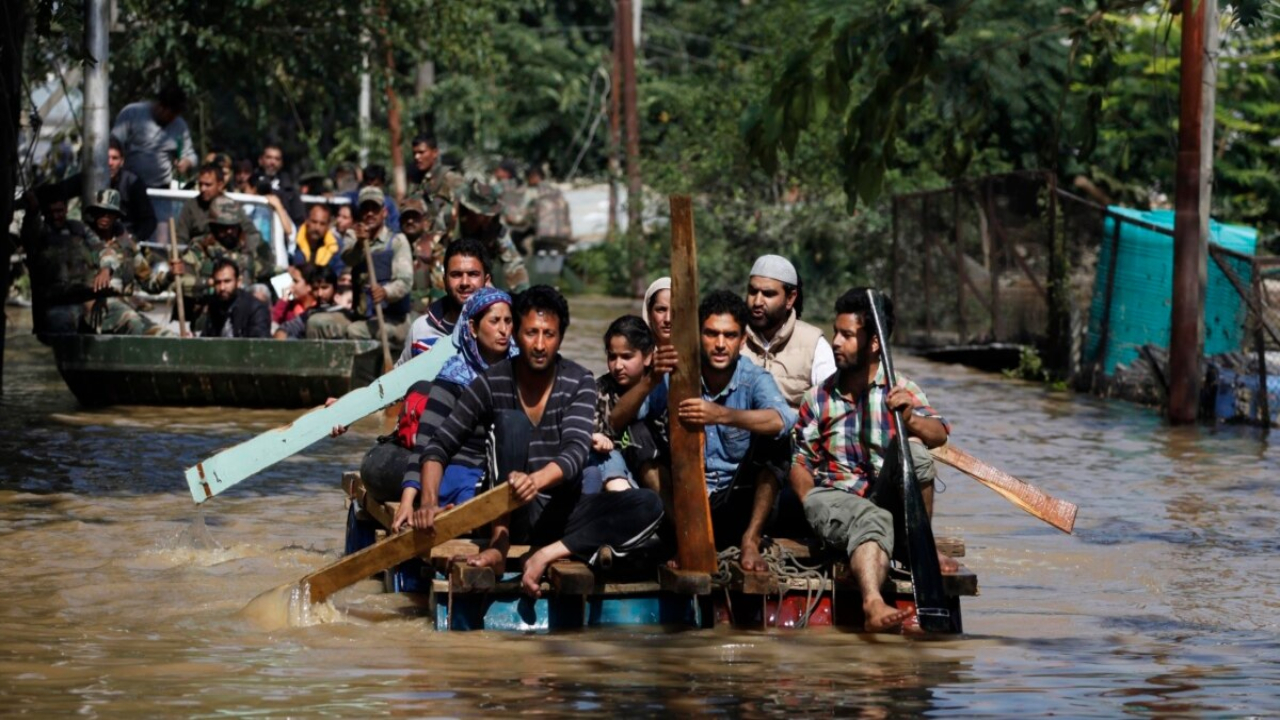
Brivify – Flash Floods tore through India and Pakistan, killing more than 280 people and leaving dozens missing. Torrential rains fell without warning, transforming small rivers into deadly torrents that swallowed entire communities. In India-controlled Kashmir, villages disappeared under rising water. Meanwhile, Pakistan’s Khyber Pakhtunkhwa province suffered widespread destruction as swollen rivers crushed homes and displaced thousands. The speed of the disaster shocked many residents, leaving them little time to react. Climate experts emphasize that these floods are not isolated events but part of a growing global trend fueled by climate change. Rescue teams rushed in with helicopters, boats, and earthmovers to save as many lives as possible. They managed to evacuate thousands, but relief efforts remain overwhelmed. Survivors face food shortages, broken infrastructure, and constant fear of renewed rainfall. Leaders in both countries promised quick aid, yet the road to recovery looks long. This tragedy exposes how fragile the region is and why stronger climate resilience must become a shared goal.
“Also read: Safe Routes to School: A Global Perspective on Child Safety“
A Himalayan Village Reduced to Ruins
Chositi, a small village in Kashmir’s Kishtwar district, became the symbol of devastation. A sudden cloudburst unleashed a wave of destruction, sweeping away houses, vehicles, and even a large community kitchen filled with pilgrims. At least 60 people died, while 80 more remain missing, likely carried off by raging waters. Survivors recall heartbreaking moments, with families torn apart in seconds and homes buried under mud. Rescue teams worked tirelessly, but darkness forced them to pause operations. Local witnesses, including Harvinder Singh, spoke of retrieving bodies with bare hands in desperate attempts to help neighbors. Hospitals filled quickly, treating injured pilgrims who came for a spiritual journey that ended in tragedy. Authorities suspended the pilgrimage and set up makeshift bridges to evacuate survivors. Once a vibrant hub of faith and culture, Chositi now lies silent under layers of debris. Its ruins stand as a painful reminder of how vulnerable mountain villages are to sudden climate disasters.
Pakistan’s Worst Losses and Relentless Rescue Efforts
Pakistan recorded even higher casualties, with at least 243 deaths in a matter of days. Buner district saw the deadliest toll, losing 157 people in a single day. Entire families vanished as homes collapsed, and floodwaters washed away entire settlements. Rescue crews worked nonstop with helicopters and boats, moving bodies and rushing survivors to safety. In Mansehra’s Siran Valley, nearly 2,000 tourists were trapped by landslides before being rescued in large-scale operations. Prime Minister Shehbaz Sharif convened an emergency meeting, urging disaster agencies to focus on evacuations and relief supply chains. Tragedy struck again when a helicopter delivering aid crashed due to poor weather, killing five crew members. This event highlights the danger faced not only by residents but also by those risking their lives to provide help. While emergency services fight against time, local communities struggle with grief, hunger, and displacement. The crisis continues to unfold, showing the true scale of the humanitarian emergency in Pakistan.
Climate Change Driving More Extreme Floods
Experts agree that climate change has made South Asia’s weather far more unpredictable. Rising global temperatures create heavier, sudden downpours, fueling Flash Floods and landslides. A recent study from the World Weather Attribution network found that Pakistan’s rainfall was 10 to 15 percent heavier than normal because of climate change. The melting of glaciers in Gilgit-Baltistan worsens the risk, creating unstable glacial lakes that threaten to burst. In India, deforestation and unplanned construction amplify the damage by destabilizing hillsides and blocking natural drainage. Each year, local governments promise new flood management systems, yet implementation remains slow. Without major investment in climate adaptation—such as reforestation, sustainable infrastructure, and early-warning systems—millions remain at risk. These Flash Floods are not just seasonal disasters but a clear signal that South Asia’s environment is collapsing under stress. Only strong policies, backed by regional cooperation, can prevent these tragedies from becoming an annual reality.
Long-Term Challenges for Survivors and Nations
The aftermath of these Flash Floods reaches far beyond the death toll. Thousands of families lost their homes, crops, and livestock, creating deep economic scars. In agricultural regions, the loss of fertile land threatens food supply for months. Roads, bridges, and power projects lie in ruins, slowing both rescue efforts and long-term recovery. In Kashmir’s Kishtwar district, vital pilgrimage routes disappeared, cutting villagers off from aid. In Pakistan, landslides blocked key highways, paralyzing trade and relief deliveries. International organizations promised help, but limited resources make coordination difficult. Survivors now live in makeshift camps, battling disease, trauma, and uncertainty about the future. Mental health experts warn that the psychological scars will linger as deeply as the physical losses. Rebuilding will require not just financial investment but also trust and resilience within affected communities. Governments must turn promises into real action, creating infrastructure that can withstand future storms and protect vulnerable populations.
A Call for Cooperation Beyond Borders
This tragedy crosses borders, proving that natural disasters do not recognize political boundaries. India and Pakistan, often divided by conflict, now share a common wound. Both nations rely on the same river systems and mountain ecosystems, which makes cooperation vital. Regional leaders must set aside differences and create shared disaster-response mechanisms. Joint projects could include early-warning systems, cross-border rescue exercises, and agreements on water management. International support is also crucial, particularly in funding climate adaptation measures that South Asia cannot afford alone. If this disaster sparks greater collaboration, it may offer a chance to protect millions of lives in the future. The floods must be remembered not only for their destruction but also for the opportunity they present: a chance to rebuild stronger, smarter, and together. Without cooperation, future storms will strike with even greater ferocity, repeating the same cycle of grief and loss.