Chinese Astronauts, A Harrowing Return After Space Debris Damage Prolongs Their Mission
Brivify – The return of the Chinese astronauts from the Shenzhou-20 mission did not unfold as planned. They were supposed to land last Wednesday after completing their stay aboard the Tiangong space station. Instead, a suspected debris impact cracked a window on their return capsule. That small but dangerous flaw forced the crew to spend more than a week longer in orbit. As someone who follows space exploration closely, I find moments like this both alarming and awe-inspiring. They remind us how unpredictable space can be, even with the most advanced engineering.
“Read also: Ukraine’s Oil Hub Strike and Russia’s Deadly Attacks Leave Two Nations on Edge“
A Tiny Debris Strike That Changed the Entire Mission Timeline
According to Xinhua, controllers postponed the return after spotting “a slight crack” on the capsule window. Space debris may sound trivial, but even tiny fragments travel at extreme speeds. A particle no larger than a grain of sand can damage metal, windows, and even spacecraft shielding. Because of this, the China Manned Space Agency classified the return vehicle as unsafe. The agency’s quick response reflects decades of global lessons about orbital hazards and crew safety.
Returning Home on a Different Spacecraft
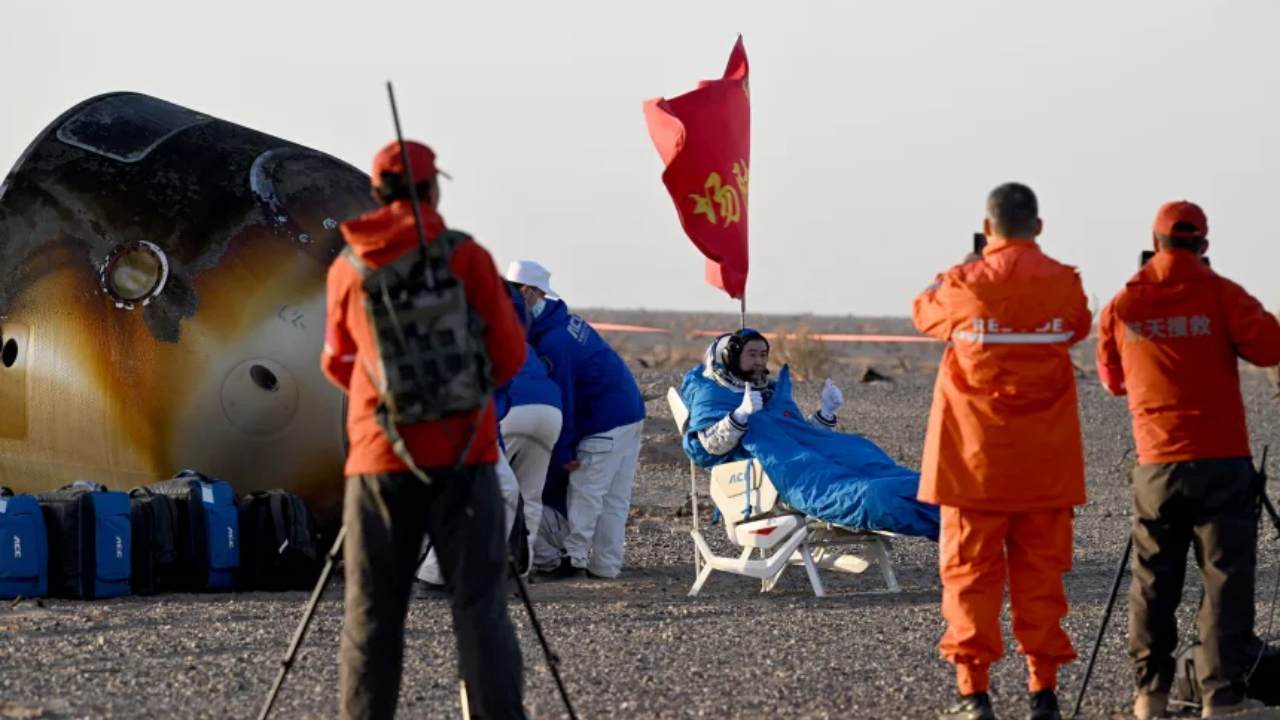
Since Shenzhou-20 could not guarantee a safe landing, the astronauts returned aboard Shenzhou-21, the craft that had just delivered their replacements. After nine extra days floating in microgravity, they finally touched down on Earth. Medical teams confirmed that the crew was in excellent health. For me, the most impressive part of this event is how calm and adaptable the astronauts remained. Their discipline speaks to the mental strength needed for long missions, especially when plans change without warning.
Life on Tiangong During the Unexpected Extension
The delay did not disrupt operations on Tiangong. China designed the station to house two crews at once, giving Shenzhou-20 and Shenzhou-21 astronauts enough space to work and live together. They continued experiments, supported maintenance, and adjusted to the extended routine. This flexibility shows how far China’s space program has progressed. It also proves that Tiangong has matured into a robust orbital home comparable to other major space facilities.
The Astronauts Reflect on the Hard Realities of Space
After landing, Chinese Astronauts Chen Dong shared a honest message. “The path of humanity’s exploration of space is not smooth,” he said. “It is full of difficulties and challenges.” His words capture something powerful. Spaceflight remains dangerous, even with modern technology. Yet Chinese Astronauts continue because curiosity and duty push them forward. Hearing Chen speak so openly gives this mission a human dimension that goes beyond engineering and calculations.
Tiangong’s Expanding Role in Global Space Science
Tiangong is now one of only two operational space stations, standing beside the ISS. Since its completion in 2022, China’s biannual Shenzhou launches have become a point of national pride. China even broke the American record for the longest spacewalk with a nine-hour outing. Soon, Tiangong will welcome its first foreign astronaut from Pakistan. This step signals China’s growing willingness to open its space program to international partners, even as global tensions rise.
The New Crew and Their Long Stay Ahead
With the Shenzhou-20 capsule no longer usable, the Shenzhou-21 crew now lacks a return vehicle until Shenzhou-22 launches next year. Among them is Wu Fei, the youngest Chinese astronaut to travel to space at 32. Xinhua reports that an upcoming mission will also include an astronaut who stays more than a year for a long-duration residency experiment. These extended stays help researchers understand how the human body reacts to long periods in orbit knowledge that will be essential for future lunar and Martian missions.
“Read more: Egypt’s New 155mph Desert-Proof Trains Mark a Historic Leap Forward“
Growing Concerns Over Space Debris
This incident highlights the rising danger of space debris. NASA has dealt with similar problems. Frank Rubio spent 371 days in orbit after debris damaged his Soyuz spacecraft. That mission became a US record. NASA astronauts Butch Wilmore and Suni Williams also faced delays when their craft malfunctioned, extending a one-week stay to more than nine months. As more satellites and commercial missions crowd Earth’s orbit, these threats will only increase. Global cooperation is becoming essential.
Rivalry Between China and the United States Intensifies
China’s rapid progress in space exploration has sparked concern in Washington. The US is racing to land astronauts on the Moon again under the Artemis program. China and Russia are developing the International Lunar Research Station as their competing framework. To me, this competition feels like a new version of the space race one shaped by cooperation, rivalry, and strategic ambition. Space is no longer just about science; it is also about leadership.
A Story That Blends Courage, Engineering, and Global Stakes
The experience of the Chinese astronauts aboard Shenzhou-20 illustrates the delicate balance of risk and innovation that defines human spaceflight. Their extended stay shows how even minor events, like a tiny debris strike, can alter mission plans. Yet it also highlights the resilience and commitment of the people who keep these programs alive. Their safe return adds another chapter to China’s growing presence in space and reinforces a timeless truth: space exploration demands courage, patience, and the will to face the unknown.