U.S. Launches Seventh Strike on Alleged Drug Vessels, A Controversial Fight Against Drug Trafficking
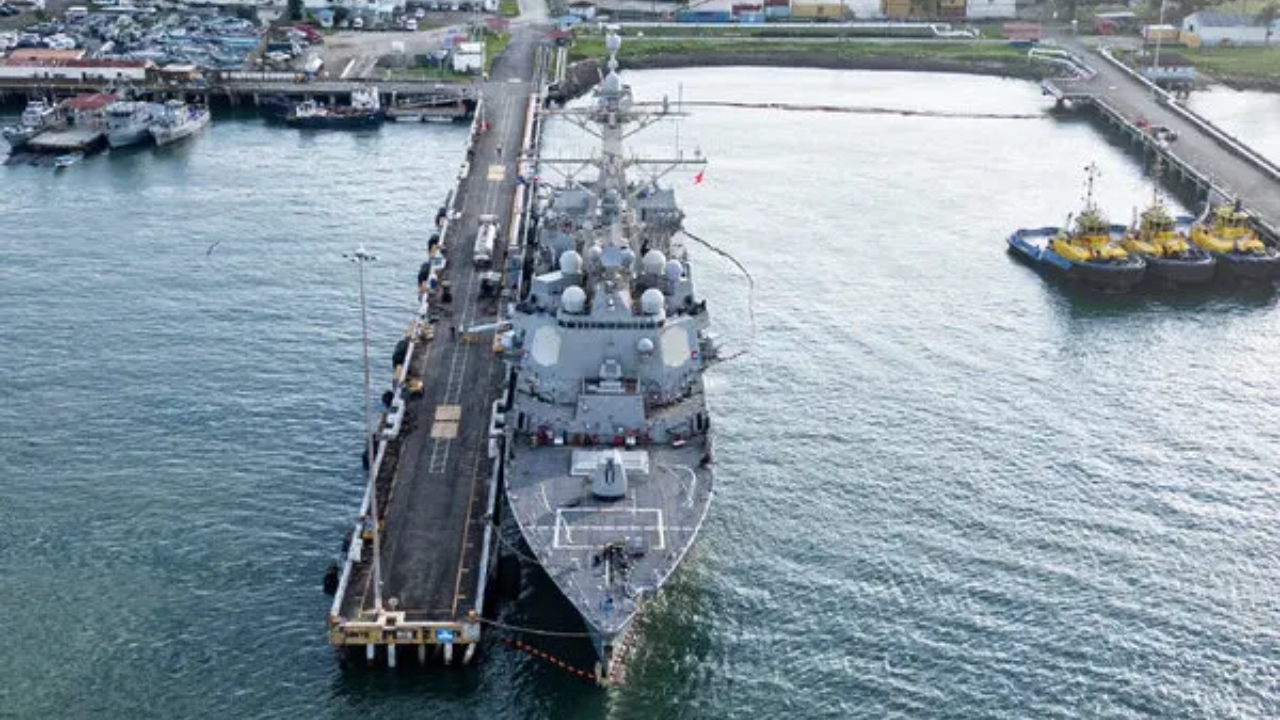
Brivify – When dawn broke over the open waters, news spread fast the United States had carried out its seventh strike on alleged drug trafficking vessels. The announcement came with the usual sense of authority, but once again, no evidence followed. Officials spoke about protecting international waters and combating narcotics networks, yet not a single image, report, or testimony confirmed the targets’ true nature.
As I watched this unfold, I couldn’t help but sense a familiar pattern action first, explanation later. The operation, described in confident terms, left a lingering question in its wake: how many of these “alleged” vessels were actually linked to drugs? Without proof, even a successful strike can feel like a story missing its truth.
“Read also: Trump Shifts Stance on Ukraine Strikes After Putin Summit“
The Political Pulse Behind the Mission
The War on Drugs has always carried both moral and political weight. This new series of strikes fits neatly within that narrative one of constant vigilance and firm resolve. Yet, it’s hard to ignore how these operations also serve as political instruments.
Every administration needs to show results, to remind voters and allies that America still polices the seas with unmatched reach. From my perspective, this strike seems to be part of that choreography a show of control during uncertain times. Still, in the absence of concrete evidence, that show begins to resemble performance more than policy.
A Shadow of Ambiguity Over the Evidence
Reports stated that the targeted vessels were operating under “suspicious conditions.” But what defines “suspicious”? No details were shared no intercepted cargo, no recorded communication, no traceable links to drug cartels. This lack of clarity undermines the operation’s credibility.
It’s easy for a government to claim success when no one can verify the details. Transparency isn’t just a virtue it’s the foundation of trust. Without it, even the most heroic-sounding missions drift into doubt. Personally, I believe evidence shouldn’t be optional; it should be part of the story from the beginning.
A Strategy Rooted in History
This isn’t the first time the U.S. has taken such a stance. Decades ago, the War on Drugs promised to eliminate narcotics trade through military strength and strict enforcement. Billions of dollars later, the trade still thrives only the routes and actors have changed.
The latest strikes feel like echoes from that past: powerful, decisive, but potentially misguided. Instead of dismantling drug networks, these operations often shift them elsewhere, forcing traffickers to adapt and evolve. As history shows, you can’t bomb an economy of addiction into extinction.
Geopolitics in Disguise
Beneath the moral framing lies a quieter motive geopolitical influence. Strikes like these allow the U.S. to assert dominance across key maritime zones, reminding the world of its presence. Each missile fired sends a message, not just to smugglers, but to rival nations watching closely.
To me, this dual-purpose strategy enforcing law while projecting power walks a fine line. It keeps America’s image strong but risks alienating partners who see unilateral action as overreach. What begins as an anti-drug mission can easily be interpreted as a flex of global control.
When Secrecy Replaces Accountability
Officials often defend their silence by citing “classified intelligence.” Yet this secrecy has become a pattern rather than an exception. In nearly every U.S. military report about drug trafficking, the supporting data remains locked away, inaccessible to the public or even international allies.
This approach might protect operations in the short term, but it damages credibility over time. A democracy that fights behind closed doors risks losing the moral ground it claims to stand on. In my opinion, true strength lies not just in military might, but in the courage to be transparent.
“Read more: Brewing Tensions: How Rising Coffee Costs and Tariffs Are Impacting Roasters and Your Morning Cup“
Collateral Damage and Human Consequences
Each so-called precision strike comes with real-world risks. Maritime regions involved in these operations are home to countless fishing crews and small traders who rely on the sea for survival. A single misidentification could turn a life’s work into wreckage.
We rarely hear about those who are caught in the crossfire. The silence surrounding their stories is deafening. The fight against drug trafficking must not come at the expense of innocent lives. Otherwise, justice becomes indistinguishable from harm, and noble intent turns hollow.
Time for a New Approach
After decades of enforcement-heavy strategies, the global narcotics trade remains resilient. The U.S. can continue striking targets, but without addressing root causes poverty, inequality, and demand the results will stay temporary.
It’s time to rethink the playbook. Instead of endless military operations, investments in education, rehabilitation, and economic growth could provide more lasting impact. In my eyes, this shift from punishment to prevention would mark a true evolution in how the world tackles drug trafficking.
Strength Needs Clarity
The seventh strike on alleged drug vessels may have been launched in the name of security, but it leaves the world with more uncertainty than assurance. Without proof, even the most sophisticated operation feels like a question mark.
Power, when paired with secrecy, breeds suspicion. If the United States wants to lead the global fight against drug trafficking, it must lead with truth not mystery. Only through transparency can strength be trusted, and only through evidence can justice endure.